




Do you frequently feel bloated, exhausted, or deal with unexplained skin issues, despite eating a healthy diet? It’s a common frustration in our fast-paced lives. Getting a food intolerance test in Dubai is a practical first step to uncover the root cause and reclaim your well-being. These specialized tests are designed to identify specific foods that may be triggering delayed, non-allergic reactions in your body, leading to chronic discomfort.
Why Food Intolerance Testing Is Gaining Momentum in Dubai
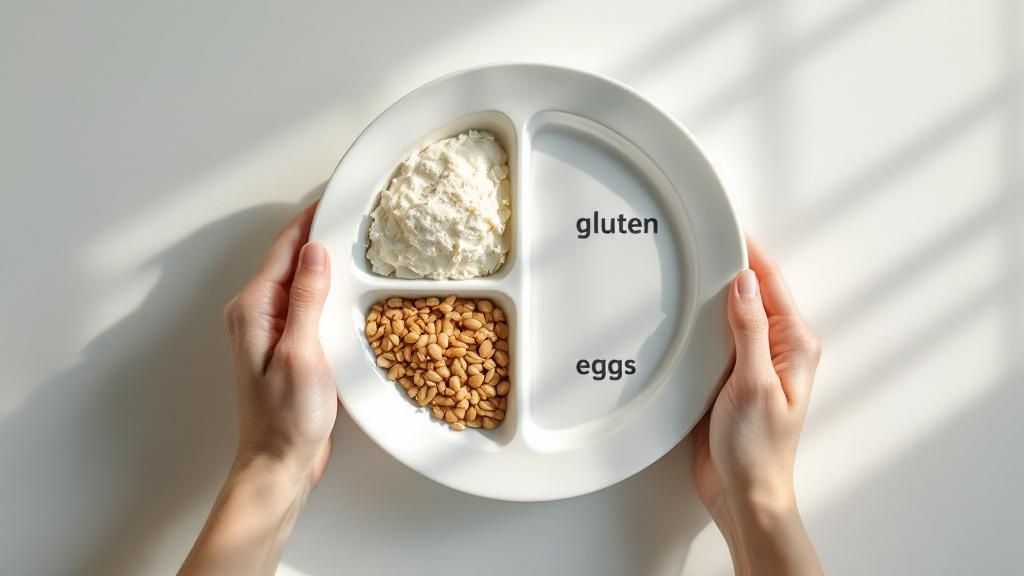
Living in a vibrant, cosmopolitan city like Dubai means hectic schedules and an incredible array of international cuisines at our doorstep. While this is a major perk of living here, it can also inadvertently lead to persistent digestive issues and nagging discomfort. Many residents find themselves grappling with symptoms like chronic headaches, stubborn stomach problems, and fatigue with no obvious cause.
This is where understanding food intolerance becomes a game-changer. It’s crucial to distinguish it from a food allergy, which is an immediate and often severe immune system response. A food intolerance, by contrast, is primarily a digestive system issue.
Think of it this way: a food allergy is like a fire alarm—loud, sudden, and demanding immediate attention. A food intolerance is more like a slow, dripping tap. The reaction is delayed and cumulative, sometimes taking hours or even days to manifest. This delay makes it nearly impossible to connect the symptom to the specific food that caused it without professional testing.
Connecting Symptoms to Solutions
The growing awareness of this key difference is why so many people are now seeking a food intolerance test in Dubai. They’re tired of the guesswork and are actively looking for definitive answers to their health puzzles. The market reflects this trend; food allergen and intolerance testing in the Middle East and Africa is projected to grow into a USD 70.99 million industry by 2029, driven by this increased consumer awareness.
This desire for clarity has also fueled demand for more convenient healthcare solutions. Instead of navigating traffic for a clinic appointment, services like a doctor on call in Dubai make it easy to get professional medical advice from the comfort of home. A test can offer clear, actionable insights by revealing exactly which foods your body is struggling to process.
A food intolerance test offers a personalized roadmap, not just a diagnosis. It empowers you to make informed dietary changes that can significantly improve your daily quality of life, turning confusing symptoms into clear, manageable steps toward better health.
Ultimately, taking this proactive step allows you to stop guessing and start a targeted journey toward feeling great. By identifying your specific trigger foods, you can confidently begin an elimination diet, backed by data that is unique to your body.
Understanding Food Intolerance Versus a Food Allergy
Many people use the terms “food allergy” and “food intolerance” interchangeably, but they are fundamentally different conditions. Grasping this distinction is the first step to understanding your symptoms and determining which test you truly need. Finding the right food intolerance test in Dubai begins with knowing exactly what you're up against.
A simple analogy is this: a food allergy is a fire alarm. It's your immune system sounding a loud, immediate, and potentially dangerous warning. Your body mistakenly identifies a specific food protein as a threat and launches a full-scale defense, releasing chemicals like histamine that cause classic allergic reactions.
A food intolerance, however, is more like a slow, dripping faucet. This is not an immune issue; it's a digestive one. The symptoms often creep up on you, sometimes hours or even days after eating the offending food. This delayed reaction makes it incredibly difficult to connect the dots without proper testing, which is why countless people in Dubai live with chronic discomfort, completely unaware of the dietary cause.
This visual illustrates how a healthcare professional can help you navigate these differences and choose the best path forward.

The image effectively captures the essential partnership between patient and expert—it’s this clear guidance that transforms test results into a truly healthier lifestyle.
A Tale of Two Systems: Immune vs. Digestive
The fundamental difference lies in which body system is reacting.
A food allergy is a full-blown immune system response. When you consume an allergen, your body produces IgE (Immunoglobulin E) antibodies to fight it. This can trigger immediate and serious symptoms like hives, swelling, difficulty breathing, or even life-threatening anaphylaxis.
On the other hand, a food intolerance is a digestive system issue. It typically occurs when your body lacks a specific enzyme needed to break down a food, such as the lactase enzyme required for dairy. This leads to symptoms like bloating, gas, stomach pain, and diarrhea. While these can make you feel miserable, they are not life-threatening.
With a food allergy, even a microscopic amount of the trigger food can cause a major reaction. With an intolerance, you can often consume a small amount of the food without significant problems.
Spotting the Difference: Timing and Symptoms
Another key indicator is the timing and nature of your symptoms. Allergic reactions are fast and intense, usually appearing within minutes to a couple of hours. Intolerance symptoms are slow-burn, taking anywhere from a few hours to 72 hours to appear. It's this long delay that causes so much confusion.
To make it crystal clear, here’s a quick comparison of the key differences:
Key Differences: Allergy Versus Intolerance
| Characteristic | Food Allergy | Food Intolerance |
|---|---|---|
| Body System | Immune System | Digestive System |
| Response Time | Immediate (minutes to 2 hours) | Delayed (up to 72 hours) |
| Key Symptoms | Hives, swelling, itching, anaphylaxis | Bloating, gas, diarrhea, headaches |
| Severity | Can be life-threatening | Uncomfortable but not life-threatening |
| Trigger Amount | A tiny amount can cause a reaction | Small amounts may be tolerated |
Understanding these distinctions is crucial. If your symptoms are chronic, delayed, and primarily digestive, there’s a strong chance an intolerance is the real culprit. This is precisely why a specialized food intolerance test in Dubai is the most logical next step to finally pinpoint your trigger foods and get back to feeling your best.
Choosing the Right Food Intolerance Test in Dubai

Once you suspect a food intolerance is the source of your ongoing discomfort, the next step is getting tested. It's easy to feel overwhelmed by the options available for a food intolerance test in Dubai, but understanding the different methods makes the choice much clearer. Each test offers a unique perspective on how your body is reacting to what you eat.
The ultimate goal is to stop guessing and start making data-driven decisions. Instead of randomly eliminating entire food groups and hoping for the best, a proper test provides a personalized roadmap, pointing directly to the potential culprits in your diet. This targeted information is the key to creating a sustainable food plan that finally works for you.
It's no surprise that demand for these tests is soaring. The global food intolerance test market reached USD 14.5 billion in 2023 and is projected to climb to USD 32.1 billion by 2032. We’re seeing this trend firsthand in Dubai, where modern lifestyles and diverse diets have led to a rise in issues like gluten sensitivity and lactose intolerance.
IgG Antibody Blood Tests Explained
One of the most common methods is the IgG (Immunoglobulin G) antibody blood test. This test requires only a small blood sample to measure the IgG antibodies your immune system produces in response to different foods. It's incredibly thorough, often screening for over 200 different food items simultaneously.
The theory is straightforward: elevated levels of IgG antibodies to a certain food may indicate a sensitivity or intolerance. It’s a sign that your body is having a delayed, non-allergic inflammatory reaction. While not a final diagnosis on its own, the results serve as an excellent starting point for a targeted elimination diet, ideally under professional guidance.
For those with busy schedules, the convenience of at-home services has been a game-changer. You can have a professional come to your home or office to collect the sample, making the entire process seamless. To see how easy it is, you can find out more about getting a lab test at home in Dubai and how it fits into a modern, fast-paced lifestyle.
Hydrogen Breath Tests for Specific Sugars
While IgG tests provide a broad overview, other tests are designed to identify specific intolerances with high accuracy. The hydrogen breath test is considered the gold standard for diagnosing problems with digesting sugars like lactose (from dairy) and fructose (from fruit).
The process is simple and non-invasive:
- Baseline Reading: You breathe into a small device to get a starting measurement of hydrogen in your breath.
- Test Solution: You drink a solution containing a specific amount of lactose or fructose.
- Regular Readings: Over the next few hours, you continue to breathe into the device at set intervals.
If your body cannot properly digest the sugar, bacteria in your gut ferment it, producing excess hydrogen gas. This gas is absorbed into your bloodstream, travels to your lungs, and is exhaled. A significant rise in your breath's hydrogen levels is a clear indicator of an intolerance.
The Medically Guided Elimination Diet
Beyond lab work, the elimination diet remains one of the most powerful diagnostic tools, often used to confirm the findings of an IgG test. It’s a methodical approach where you remove suspected trigger foods for a few weeks—typically two to four—and then reintroduce them one by one to monitor your body's reaction.
Think of a lab test as the map and the elimination diet as the journey. The test gives you the direction, but the diet is how you confirm what you find along the way, observing your body's reactions firsthand.
It is crucial that this process is supervised by a doctor or registered dietitian. They ensure you maintain proper nutrition while eliminating foods and help you accurately interpret your body's signals during reintroduction. This expert guidance is what transforms a simple diet change into a powerful tool for long-term health.
The Rise of At-Home Food Intolerance Testing Services
In a city that never stops, the last thing you want is to waste hours in traffic or a clinic waiting room. For busy Dubai residents juggling demanding careers and packed social lives, convenience isn't just a nice-to-have—it's everything. This very real need has sparked a huge shift in how we approach healthcare, especially for services like a food intolerance test in Dubai.
Gone are the days when getting a test meant blocking out half your day for a trip to the lab. Healthcare providers have caught on to the value of our time and privacy, and many now bring their services right to your front door. This at-home model has completely changed the game for anyone looking to take charge of their health without disrupting their schedule.
Instead of fitting your day around a clinic, the clinic now fits around you. It's a modern approach that makes proactive health management feel easy and accessible, not just another chore on an endless to-do list.
The Ultimate Convenience Unpacked
Picture this: You book your appointment online in a couple of minutes, picking a time that works perfectly for you. There's no need to brave Sheikh Zayed Road or circle the block looking for parking. Instead, a certified, DHA-licensed professional shows up at your home or office, ready to get the test done quickly and discreetly.
The whole sample collection process is over in a flash—often taking less than fifteen minutes. It's a smooth, private experience that respects both your time and your personal space, which is why it's become a go-to option for professionals and families all over the city. This level of service turns a medical task into a simple, hassle-free step in your wellness journey.
The benefits of choosing an at-home food intolerance test in Dubai are pretty clear:
- Significant Time Savings: You reclaim hours that would have been lost to travel and waiting, freeing you up to focus on work, family, or other priorities.
- Complete Privacy and Comfort: Being tested in your own familiar environment offers a level of comfort and discretion that a public clinic cannot match.
- Reduced Stress and Hassle: By eliminating the logistical challenges of a clinic visit, the entire process becomes straightforward and stress-free from start to finish.
How the At-Home Process Works
The at-home testing service is designed to be incredibly simple and user-centric. The journey from suspecting a food intolerance to receiving clear answers involves just a few easy steps.
It all starts with a simple booking and concludes with a detailed report that empowers you to make smarter dietary choices. The process puts you in control, allowing you to take a proactive step toward better health without any of the usual headaches.
Here’s a step-by-step look at what you can expect:
- Easy Online or Phone Booking: It all begins with a quick booking. You can schedule your appointment through a website or a simple phone call, choosing a date and time that fits your life.
- Professional Home Visit: A qualified phlebotomist or nurse arrives at your chosen location right on time. They bring a full, sterile, medical-grade kit to ensure the sample collection is safe and professional.
- Quick and Painless Sample Collection: The professional will take a small blood sample. The process is fast and handled with care to make sure you're comfortable.
- Secure Laboratory Analysis: Your sample is then safely transported to an accredited lab for a full analysis. There, it's screened against a huge range of common foods to measure your body's IgG antibody response.
- Confidential Digital Results: Once the analysis is done—usually within a week or two—you’ll receive your comprehensive results digitally. The report clearly lays out your reactivity levels to each food, giving you an actionable starting point.
By bringing the laboratory to you, at-home testing services remove the biggest hurdles to managing your health. It’s an empowering model that puts you in complete control, making it easier than ever to get the answers you need to feel your best.
Preparing for Your Test and Interpreting the Results
Getting a food intolerance test in Dubai is a fantastic first step toward getting your health on track. But to ensure the results are as sharp and accurate as possible, a little preparation makes all the difference. Think of it like tuning an instrument before a performance—you want everything just right to get a clear sound.
Most blood tests for food intolerance don’t actually require you to fast, but it never hurts to double-check with your provider. The single most important thing you can do? Hydrate, hydrate, hydrate. Drinking plenty of water in the 24 hours before your test makes it so much easier for the phlebotomist to collect your sample. It's a simple step that ensures a smooth process for everyone involved.
It’s also a good idea to chat with your provider about any medications or supplements you’re taking. Some medicines, particularly those that work on your immune system like corticosteroids, might interfere with the results. Of course, never stop taking prescribed medication without getting the green light from your doctor first.
A Simple Preparation Checklist
To keep things easy, just follow this quick guide before your at-home test:
- Hydrate Well: Drink plenty of water the day before and the morning of your test. For anyone looking to give their hydration and nutrient levels a serious boost, services like IV hydration and multi-vitamins therapy in Dubai can be a great way to support overall wellness.
- Confirm Fasting Needs: Just ask your provider if you need to skip food or drinks. It's not common for IgG tests, but it's a crucial detail to get right.
- Discuss Medications: Be upfront about every medication and supplement you're on. Your provider will tell you exactly what to do—whether you should pause them or continue as usual.
Following these simple tips helps guarantee the sample is perfect for analysis, which ultimately means you get results you can trust.
Turning Your Results into Action
Receiving your test results is exciting, but it's just the beginning of your journey. Do not view the report as a final diagnosis or a strict set of rules you must live by forever. Instead, see it as a personalized roadmap, highlighting potential culprits behind your symptoms.
Your report will likely categorize foods based on your IgG antibody levels—such as high, borderline, or normal reactivity. A high reading doesn't mean you're allergic; it simply flags a food that may be worth investigating further with an elimination diet.
Your test results are the starting point, not the finish line. They provide the crucial "what"—the potential trigger foods. A healthcare professional helps you with the "how"—creating a safe, sustainable plan to improve your health based on that data.
This is where having an expert in your corner becomes invaluable. Trying to interpret results and overhaul your diet alone can be overwhelming and nutritionally risky. A doctor or nutritionist can help connect the report to your unique health profile. They will guide you through a proper elimination and reintroduction process, ensuring you stay nourished while pinpointing exactly what's causing the trouble. That professional guidance is what truly transforms data into lasting change.
Common Food Sensitivities in the UAE's Culinary Landscape
Dubai’s food scene is a global gastronomic adventure. One day you’re enjoying a traditional Emirati breakfast with rich labneh, the next you’re grabbing Italian pasta for lunch or a flavorful Asian stir-fry for dinner. It’s a food lover's paradise, but this incredible diversity can also make it a real puzzle to figure out what’s causing that nagging bloating or fatigue.
This is where a food intolerance test in Dubai becomes so invaluable. It allows you to look past the delicious flavors to identify which specific ingredients don't agree with your body. Often, the main culprits are hidden in plain sight, staples in both the local and international dishes we enjoy daily.
Key Trigger Foods in the Local Diet
When you start investigating food sensitivities, a few common suspects consistently appear. These foods are ubiquitous in the UAE, making them a frequent source of issues for many residents.
Dairy Products: From labneh and halloumi at breakfast to countless cups of karak chai, dairy is a major part of daily life here. Lactose intolerance is extremely common and is often the reason behind bloating and gas after consuming milk, cheese, or yogurt.
Wheat (Gluten): Wheat is another staple you can't escape. It's in traditional Khubz (Arabic bread), manakish, and the amazing pastries and pastas found on every corner. For some, a sensitivity to gluten is the root cause of everything from digestive problems to headaches and brain fog.
Nuts and Sesame: Nuts and sesame seeds (hello, tahini in our beloved hummus!) are essential to many Middle Eastern dishes. While true allergies are a serious concern, a more subtle intolerance can also be at play, causing delayed symptoms that are difficult to trace back to your meal.
This is not just anecdotal; regional health trends support it. There is a clear rise in food allergies and intolerances across the UAE, with nuts, sesame, eggs, milk, and wheat leading the pack. This growing awareness is precisely why more people are seeking reliable testing. You can get a deeper look at the data from the UAE food allergy market to see the full picture.
Identifying Your Personal Triggers
Knowing the common culprits is a good start, but every body is unique. What causes issues for a friend might be perfectly fine for you. This is particularly true for older adults, as dietary needs and sensitivities can change over time. If you're helping manage an older family member's health, our guide on elder care at home in Dubai might offer some helpful insights.
Food intolerance isn't about labeling foods as "good" or "bad." It's simply about understanding your body's unique chemistry. A test gives you the personalized data you need to build a diet that makes you feel great, not chronically uncomfortable.
Ultimately, pinpointing your specific triggers is the only way to truly take back control of your health. When you combine local dietary knowledge with a personalized test, you can finally stop the guessing game and create an eating plan that lets you enjoy Dubai’s incredible food scene without the uncomfortable side effects.
Your Questions About Food Intolerance Testing Answered
When you're ready to get to the bottom of your symptoms, a few practical questions naturally pop up. Thinking about the costs, the accuracy, and the process helps you move forward feeling confident and prepared. Let's tackle some of the most common questions people in Dubai ask before booking their food intolerance test.
How Much Does a Food Intolerance Test Cost in Dubai?
The price of a food intolerance test in Dubai varies depending on its comprehensiveness. The primary factor influencing the cost is the number of food items the test screens for.
A basic panel might start at around AED 1,500. For a more extensive test that checks your reaction to over 200 different foods, the price can exceed AED 2,500. The good news is that at-home testing services are very competitively priced, and this fee typically includes the convenience of a qualified professional visiting you. It’s always wise to confirm the final cost with your provider and ask if your health insurance might cover a portion of it.
Are Food Intolerance Tests Accurate?
This is an excellent question, and the answer requires some nuance. The perceived accuracy depends on the type of test and your expectations.
The scientific community holds mixed views on IgG blood tests for intolerance. While these tests are highly effective at measuring the IgG antibodies your body produces in response to foods, some experts argue this merely indicates exposure to a food, not a true intolerance.
Despite this debate, countless individuals find the results to be an incredibly useful roadmap for initiating an elimination diet, which remains the gold standard for identifying trigger foods. Conversely, hydrogen breath tests—used for specific issues like lactose or fructose intolerance—are widely regarded as highly accurate diagnostic tools. The best approach is always to review your results with a healthcare professional who can help you interpret them in the context of your symptoms.
How Long Does It Take to Get Test Results?
You won't have to wait indefinitely for answers, but a little patience is required. For most blood-based IgG tests conducted in Dubai, you can expect to receive your results within 7 to 14 working days from the date of sample collection.
If you are in a hurry, some labs or at-home services may offer an expedited turnaround for an additional fee. Results for hydrogen breath tests are often available much faster, sometimes even on the same day. Be sure to ask your provider about the expected timeline when you book your appointment.
Do I Need a Doctor's Referral for the Test?
For the most part, no. You typically do not need a doctor's referral to book a food intolerance test, especially with direct-to-consumer services like at-home testing. This accessibility makes it much easier to take the first step in investigating your symptoms.
However, we strongly recommend consulting with a doctor or a registered dietitian both before and after you get tested. A professional can first help rule out other medical conditions that could be causing your symptoms. Then, once you have your report, their guidance is key to creating a safe, healthy, and nutritionally complete plan based on what you’ve learned. This expert support is a crucial part of the journey, and for those who need more consistent care, our guide on nursing on call in Dubai explains how you can get continuous medical support right at home.
Ready to stop guessing and start understanding your body? Call To Doctor offers convenient at-home food intolerance testing across Dubai. Book your appointment today and take the first step towards a healthier, more comfortable life. Visit us at https://calltodoctor.ae to learn more.

Leave a Reply