




Struggling with recovery and finding it difficult to travel to a clinic? Imagine receiving expert physiotherapy care without ever leaving your house. That’s the core of a physiotherapy home service—a fully qualified physiotherapist, equipped with all the necessary gear, comes directly to your doorstep. This personalized approach to recovery lets you heal in the comfort and privacy of your own home, completely eliminating the stress and hassle of travel.
What Is a Physiotherapy Home Service?

A physiotherapy home service is professional medical care adapted to fit your life and your home. Think of it as having a dedicated recovery specialist who makes house calls. This modern healthcare solution sidesteps the usual challenges of clinic visits—the stressful commute, the impersonal waiting room, and the unfamiliar environment.
Instead of trying to replicate daily movements in a clinic, your therapist works with you in the exact spaces you use every day. They show you how to apply recovery techniques in your own kitchen, bathroom, and bedroom. This practical, real-world application is what makes a physiotherapy home service so incredibly effective for achieving genuine independence.
A Personal Trainer for Your Recovery
A great way to understand this service is to think of it as hiring a personal trainer, but specifically for your physical recovery. Just as a fitness coach designs a workout plan based on your goals, a home physiotherapist creates a bespoke treatment plan centred around your medical needs and your home's layout.
This one-on-one, tailored approach is a game-changer for many individuals, especially those with:
- Post-surgical limitations: If you're recovering from surgery like a hip or knee replacement, you can begin vital rehabilitation immediately without the strain of travel.
- Mobility challenges: For the elderly or anyone with a chronic condition, a physiotherapy home service ensures consistent care without the struggle of leaving the house.
- Demanding schedules: Busy professionals and parents can seamlessly fit essential therapy into their packed lives without major disruptions.
It's clear why the demand for this personalized care is growing. The home healthcare market in the Middle East, which includes these services, was valued at USD 6.12 billion and is projected to reach an incredible USD 11.80 billion by 2033. This growth highlights a significant shift toward patient-first healthcare models.
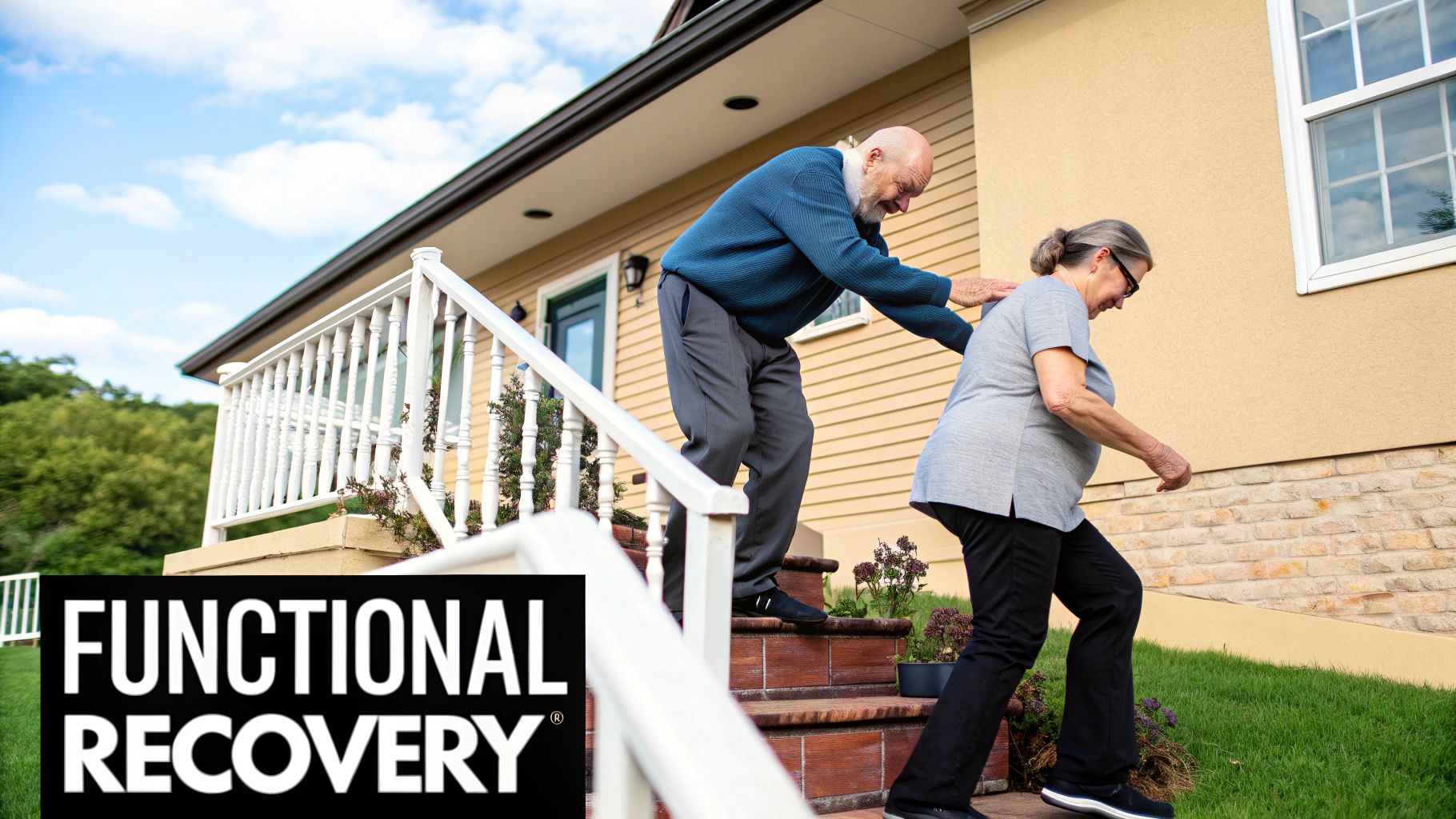
The real magic of in-home physiotherapy is its focus on functional recovery. Learning to climb your own stairs or move safely around your own kitchen helps you regain practical, real-world independence in a way a clinic setting just can't match.
By bringing expert care right to your doorstep, a physiotherapy home service offers a smoother, more effective path to getting you back on your feet. To learn more, our guide to physiotherapy on-call in Dubai breaks down exactly how the service works in the UAE.
Key Benefits of Choosing In-Home Physiotherapy
Opting for a physiotherapy home service delivers significant advantages that extend far beyond simply skipping a trip to the clinic. It’s about integrating professional care into your daily life, making the healing process feel more natural, comfortable, and ultimately more effective.
The primary benefit is functional recovery. Instead of practicing movements on generic equipment, your therapy is built around your actual living space. This real-world application is a total game-changer for regaining your independence and confidence.
Personalised Care in Your Own Environment
Let's say you're recovering from knee replacement surgery. In a clinic, you might practice on a standard set of stairs. At home, your physiotherapist is right there with you, guiding you up and down your own staircase. They can identify unique challenges—like a tricky corner or the texture of your carpet—and adapt your exercises on the spot. This practical approach significantly speeds up recovery.
Your therapist gains a firsthand look at your daily routines, allowing them to design exercises that make an immediate impact. This could involve:
- Kitchen Navigation: Learning how to safely reach for items in your own cupboards.
- Bathroom Safety: Practicing how to get in and out of your specific shower or bath.
- Bedroom Mobility: Mastering the best way to get out of your own bed without pain or strain.
This level of customization means every movement you practice is directly aimed at making your day-to-day life easier and safer. You’re not just strengthening muscles; you're re-learning how to live confidently within your own four walls.
A familiar environment creates a sense of psychological safety, which is crucial for recovery. When you feel comfortable and secure, stress levels drop, allowing your body and mind to focus completely on healing. This can lead to faster, more lasting results.
Enhanced Comfort and Family Involvement
Healing is as much a mental process as a physical one. Receiving care in the comfort of your home reduces the anxiety and stress often associated with clinical settings. This supportive atmosphere helps you stay more focused and motivated throughout your recovery.
Furthermore, a physiotherapy home service makes it much easier for family members to be involved. They can observe sessions and learn directly from the therapist how to best support you between visits. This collaborative approach builds a strong support system, ensuring you receive consistent encouragement and assistance. When family is actively involved, it improves adherence to your exercise program and fosters a positive, team-based environment for healing.
Who Benefits Most from Home Physiotherapy?
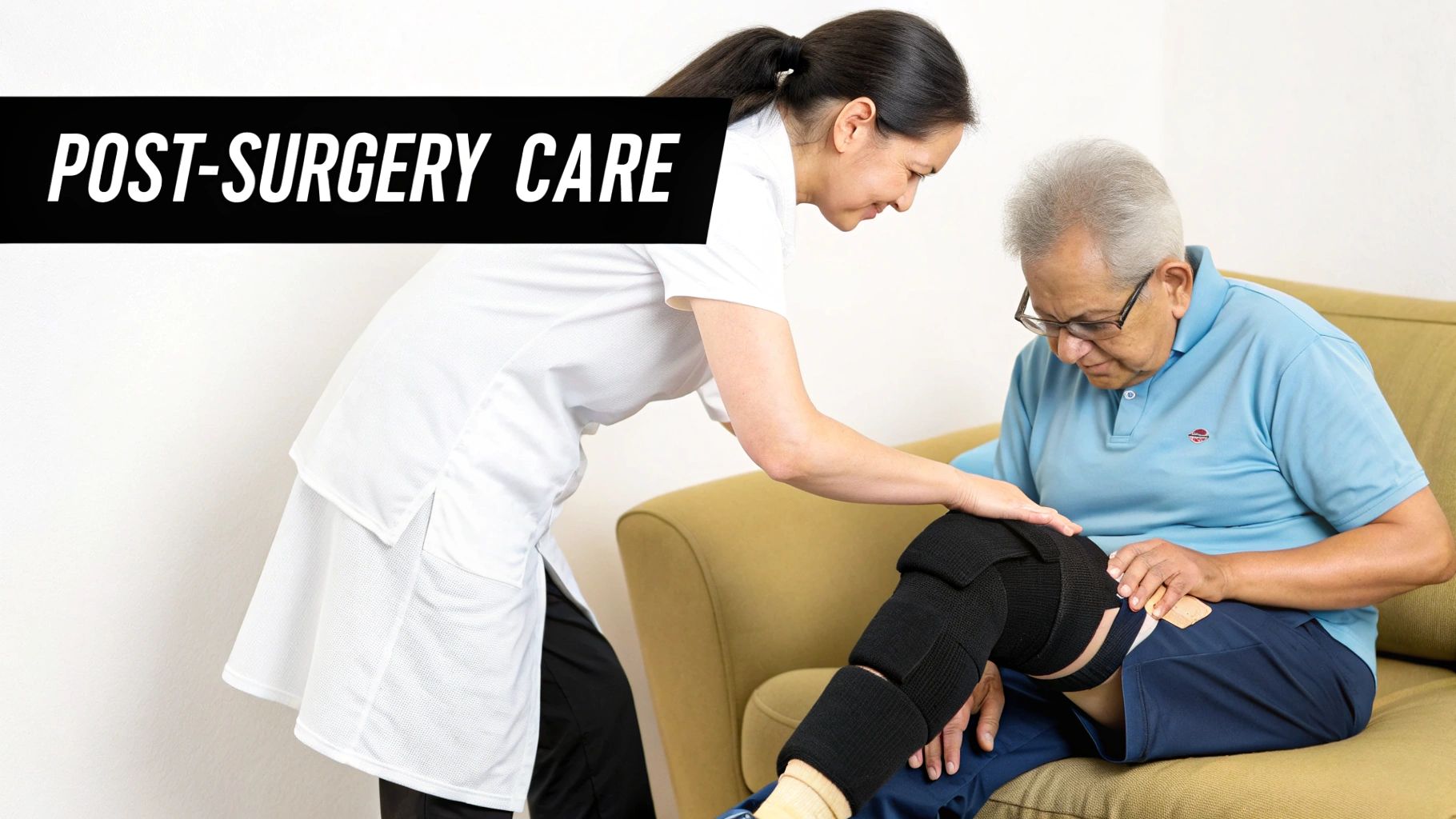
While nearly everyone can appreciate the convenience of a physiotherapy home service, for certain individuals, it's an absolute necessity. It serves as the critical link between hospital discharge and a return to independent living, ensuring the recovery journey continues smoothly without logistical hurdles that can derail progress.
For post-surgical patients, such as those who have had a hip or knee replacement, the thought of traveling to a clinic can be daunting and physically taxing. Home physiotherapy eliminates this challenge, allowing rehabilitation to begin immediately in a safe and comfortable setting.
Supporting Chronic Conditions and Neurological Recovery
For individuals managing long-term health issues, consistency is key. Living with conditions like arthritis, multiple sclerosis, or Parkinson’s disease can make regular trips to a clinic an exhausting chore. A physiotherapy home service removes this barrier, bringing consistent, expert care to your doorstep to help manage symptoms, maintain function, and improve quality of life.
The same is true for patients recovering from neurological events. After a stroke, timely and intensive therapy is crucial for regaining movement and independence. A physiotherapist working in the home can do more than just guide exercises; they can help adapt the living space to turn everyday obstacles into rehabilitation opportunities, rebuilding confidence where it matters most.
The demand for accessible care is growing rapidly. The rehabilitation therapy services market in the Middle East and Africa, valued at USD 10.47 billion, is expected to surge to USD 28.83 billion by 2032. This reflects the increasing need for home-based services to support adults with chronic illnesses, disabilities, and post-surgery recovery.
Essential Care for the Elderly and Busy Individuals
For older adults, maintaining mobility is directly linked to safety and independence. A physiotherapy home service is incredibly practical, focusing on real-world goals like improving balance to prevent falls, building strength for daily activities, and making the home environment safer. Our guide on care for the elderly offers more advice on supporting their overall health.
Additionally, individuals with demanding schedules often neglect their own health needs. Home physiotherapy is the perfect solution for busy professionals and parents. By eliminating travel time and waiting rooms, it allows you to fit vital care into your life without sacrificing your other responsibilities, ensuring your recovery receives the priority it deserves.
Your At-Home Physiotherapy Journey Explained
Wondering what to expect when a physiotherapist arrives at your home? Understanding how a physiotherapy home service works can eliminate uncertainty and help you feel more comfortable. It’s a structured journey designed around you, from the initial consultation through to your final session—a clear roadmap with your recovery as the destination.
The process begins with an initial consultation and assessment. This is a comprehensive evaluation of your medical history, current condition, and recovery goals. Your physiotherapist will conduct a thorough physical examination to assess your strength, range of motion, balance, and pain levels.
Crucially, this first visit also includes an assessment of your home environment. Your therapist will evaluate your living space to identify potential hazards and, more importantly, discover unique opportunities for your rehabilitation. This on-site insight allows them to create a truly effective and personalized treatment plan from day one.
The Core of Your Treatment Plan
Following the assessment, your therapist designs a personalized treatment plan. This is not a one-size-fits-all document but a dynamic guide tailored to your recovery. It will combine various therapeutic techniques chosen specifically to accelerate your healing and help you return to your daily activities.
A typical physiotherapy home service session may include a mix of:
- Manual Therapy: Hands-on techniques such as massage, joint mobilization, and targeted stretching to alleviate pain, reduce stiffness, and improve mobility.
- Therapeutic Exercises: Your therapist will guide you through specific movements designed to build strength, improve balance, and increase endurance, often using your own furniture for practical application.
- Patient Education: A critical component is understanding your condition and how to manage it. Your therapist will empower you with knowledge to prevent future injuries and maintain your progress long-term.
This infographic breaks down the typical flow of an at-home physiotherapy journey, from evaluation to ongoing progress tracking.
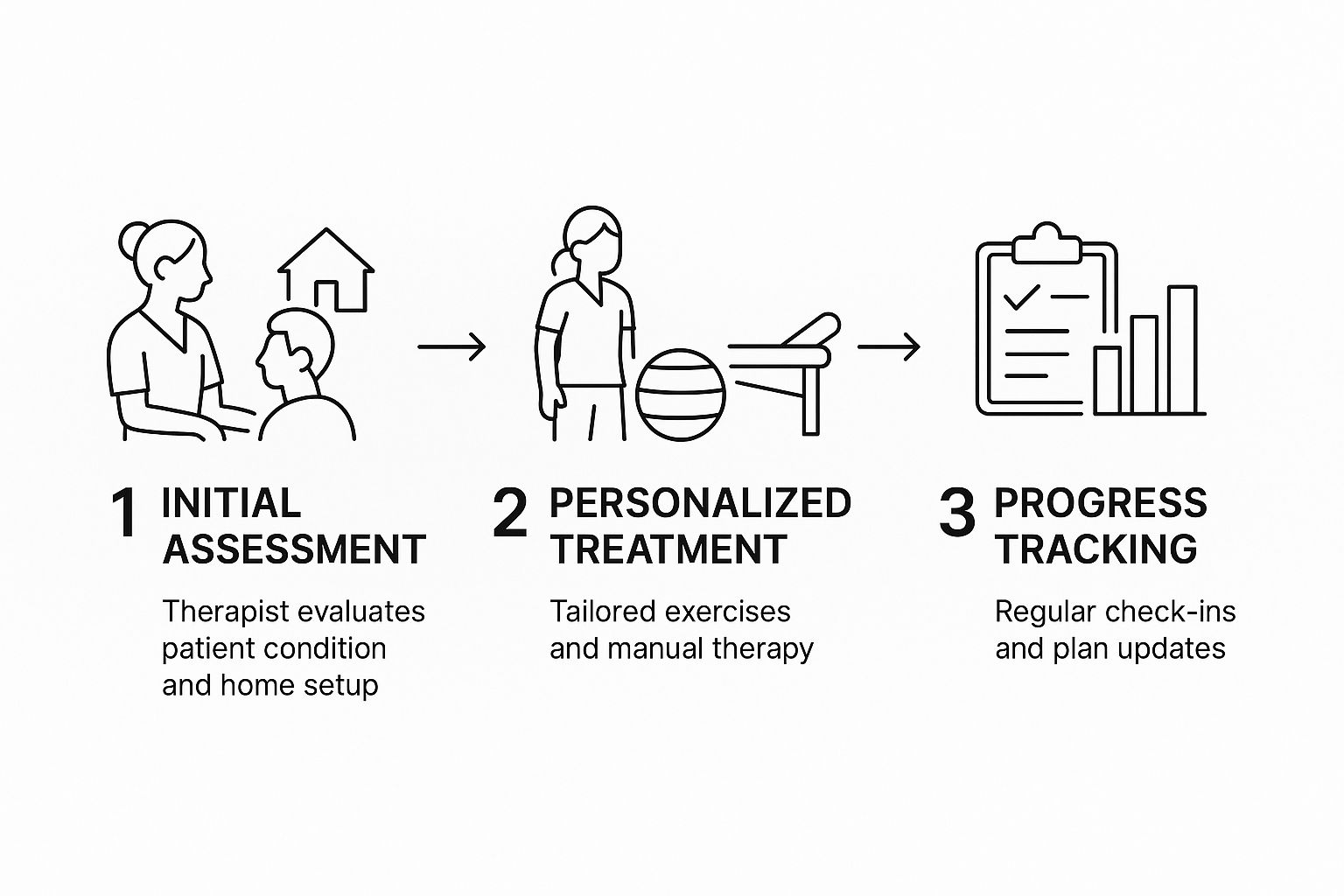
Each step logically flows into the next, creating a smooth path to recovery. For many, this structured support is as reassuring as the care received from a doctor on call service, providing reliable help when it's needed most.
Tracking Progress and Evolving Your Plan
Recovery is a dynamic process. A key part of every session is tracking your progress. Your physiotherapist will carefully monitor improvements in your strength, pain levels, and ability to perform daily tasks. This consistent feedback is vital for optimizing your care.
Progress isn’t just about reaching the final goal; it's about celebrating the small victories along the way. Your physiotherapist acts as both a clinician and a coach, adjusting your plan to keep you challenged and motivated as you regain your independence.
Based on these regular evaluations, your treatment plan will be fine-tuned. As you master one set of exercises, new, more challenging ones will be introduced. This ensures you are always moving forward, building on your successes until you achieve your recovery goals.
How Technology Is Shaping Home Physiotherapy
Today’s physiotherapy home service is evolving beyond in-person visits into a more connected and intelligent form of care. Technology is bridging the gap between sessions, providing your physiotherapist with a clearer picture of your recovery and making your treatment plan more responsive than ever before.
Telerehabilitation allows your therapist to check in on your exercises remotely. Through video calls and specialized apps, they can guide your routine, correct your form, and offer motivation between home visits. This continuous support helps keep you on track with your recovery.
This approach is gaining significant traction in our region. Telerehabilitation is expanding across the Middle East and North Africa (MENA) as a practical therapy delivery method. It has already demonstrated excellent patient outcomes and high satisfaction levels, helping address issues like therapist shortages.
Data-Driven Recovery with Wearable Technology
One of the most exciting advancements is the use of wearable sensors. These small, smart devices can be worn on a joint or limb during exercises, providing your physiotherapist with precise, real-time data on movement patterns, range of motion, and repetition quality.
This constant flow of information is a game-changer. Instead of relying solely on observations during a one-hour session, your therapist can analyze objective data to understand exactly how you’re progressing. This allows for micro-adjustments to your treatment, ensuring every exercise delivers maximum benefit.
Wearable technology transforms recovery from a series of appointments into a continuous, monitored journey. It gives your therapist a 24/7 window into your movement, enabling a level of personalization that was previously impossible.
The Rise of Telehealth Physiotherapy
The combination of virtual check-ins and data from wearables forms the core of modern telehealth physiotherapy. These tools do not replace the crucial hands-on care of a home visit but work alongside it to create a powerful, hybrid care model.
For example, your therapist might visit your home for a session focused on manual therapy, then schedule a virtual follow-up to introduce new exercises. You can learn more about how telehealth physiotherapy is making recovery more efficient. This connected approach ensures you feel supported at every step, making your physiotherapy home service more engaging and effective.
Choosing the Right Physiotherapy Home Service
Selecting the right physiotherapy home service is a critical decision on your road to recovery. To ensure you receive the best care, it's important to find a provider who understands your specific needs and has the right credentials.
First, verify their qualifications. Any physiotherapist you consider should be fully licensed and registered with local health authorities, such as the Dubai Health Authority (DHA). A reputable provider will readily share their credentials.
Evaluating Expertise and Specialization
Beyond licensing, inquire about their specific experience. If you are recovering from a sports injury, you need a specialist in sports medicine. Likewise, post-stroke recovery requires a different skill set than managing chronic back pain.
Ask directly: "How much experience do you have with [your specific condition]?" A knowledgeable therapist will be able to discuss their approach confidently. A specialist can anticipate challenges and adjust your plan proactively, leading to better outcomes.
A great physiotherapist is more than a clinician; they are a communicator, educator, and motivator. Look for someone who listens carefully, explains concepts clearly, and empowers you to be an active participant in your own recovery.
Practical Considerations for Your Peace of Mind
Finally, address practical matters to ensure a smooth experience. Clear, upfront pricing is essential. Request a full breakdown of costs, including any potential extra charges for equipment or travel. Clarify their billing process and accepted payment methods.
It's also wise to ask about their safety protocols and professional conduct policies to confirm they operate at the highest standard of care. Taking these steps helps you choose a physiotherapy home service that meets your physical needs while providing a professional and reassuring experience.
To see what top-tier care involves, you can learn more about physiotherapy at home in Dubai and see these standards in practice.
Still Have Questions About Home Physiotherapy?
Even with a clear understanding of the benefits, it's normal to have questions about how a physiotherapy home service works in practice. Here are answers to some of the most common queries.
Do I Need to Buy Any Special Equipment?
Typically, no. Your physiotherapist will arrive with a mobile kit containing essential equipment like resistance bands, small weights, and other specialized tools.
A key advantage of at-home physiotherapy is learning to use your environment for rehabilitation. Your therapist will show you how to incorporate everyday items—chairs, stairs, and even walls—into your exercise program. This makes the exercises more practical and easier to continue independently.
Is Physiotherapy at Home as Good as Going to a Clinic?
Yes, and for many people, it is more effective. The focused, one-on-one attention you receive is often superior to what a busy clinic can offer. Furthermore, the entire treatment is tailored to your real-life environment.
Think about it: instead of practicing on generic equipment, you're learning how to safely navigate your own bathroom or get out of your own bed. This direct application of skills often leads to faster, more meaningful, and lasting results.
How Can I Find Out if My Insurance Covers This?
Insurance coverage for a physiotherapy home service varies between plans. The best course of action is to contact your insurance provider directly before booking an appointment.
When you speak with them, ask specifically about your coverage for "home health services" or "in-home physiotherapy." Many reputable home care providers can also assist by verifying your coverage or providing the necessary documentation for you to submit a claim. A quick call can prevent any financial surprises.
Ready to experience the difference expert care at home can make? Call To Doctor brings professional, DHA-licensed physiotherapy services right to your door in Dubai, 24/7. Book your appointment today and take the first step toward a faster, more comfortable, and more effective recovery.

Leave a Reply