



Taking a proactive approach to your long-term wellness starts with a regular health check-up. It's easy to dismiss it as just another doctor's visit, but it's far more than that. Think of it as a crucial investment in your future—a way to catch potential health risks long before they turn into serious problems. This preventive mindset is the cornerstone of a long and vibrant life.
Why a Health Check Up Is Your Best Investment

We're all diligent about servicing our cars, right? We know that routine maintenance is the best way to prevent a costly, unexpected breakdown. It's time we started applying that same smart logic to our own bodies. A regular health check up is your body's version of a full diagnostic service, giving you a valuable snapshot of where your health stands right now.
This process is all about establishing a personal health baseline. Once you know your normal blood pressure, cholesterol levels, and other key markers, it becomes so much easier for you and your doctor to spot any concerning changes over time. This baseline is the essential reference point for all your future medical decisions.
Proactive Care Over Reactive Treatment
Preventive healthcare is always better—and a whole lot less stressful—than waiting to react to a problem. A health check up puts you back in the driver's seat, allowing you to shift from just treating symptoms to proactively managing your well-being. It’s all about picking up on those subtle warning signs that you might otherwise miss.
Here's what proactive health management really looks like:
- Early Detection: Many serious conditions, like hypertension, diabetes, and certain cancers, often have no obvious symptoms in the early stages. A screening can catch these issues when they're at their most treatable.
- Risk Assessment: By looking at your results and family history, your doctor can figure out your risk for developing certain chronic diseases and create a prevention plan just for you.
- Lifestyle Optimization: Your check-up results can be the perfect motivation to make real, beneficial changes to your diet, exercise routine, and how you manage stress.
The focus on preventive medicine is growing worldwide, and the Middle East and Africa are no exception. The health check-up market in the region is seeing incredible expansion, valued at USD 21.8 billion in 2025 and projected to hit around USD 42.3 billion by 2031. This trend makes one thing clear: people are recognizing the power of preventive care.
Creating Your Personal Health Roadmap
The results from your check-up are more than just numbers on a page; they're the building blocks for your personal health roadmap. This guide helps you navigate potential health obstacles and stay on the path toward a healthier, longer life. It also opens the door for informed, collaborative conversations with your doctor about your wellness goals.
A health screening takes abstract health advice and turns it into concrete, actionable steps tailored specifically for you. It moves you beyond generic wellness tips to a personalized strategy built on your unique biological data.
Ultimately, a health check up is an investment in your peace of mind. Knowing you're taking control of your health reduces anxiety and builds confidence. Understanding the different parts of a full body check up helps you see just how valuable it is. Whether you feel perfectly fine or are managing an existing condition, this proactive step gives you the clarity and direction to protect your most valuable asset—your health.
What Happens During a Comprehensive Health Screening?
Walking into a clinic for a health check up can feel a little intimidating if you don't know what to expect. But really, it's just a structured conversation between you and your doctor, backed up by some simple, painless tests. The whole point is to get a crystal-clear snapshot of where your health stands right now.
It all kicks off with a detailed look at your medical history. This isn't just a formality—it’s the foundation of the entire check-up. Your doctor will want to know about any past illnesses or surgeries, what medications you're currently taking, and if you have any allergies.
This chat also delves into your family's health history, since some conditions have a genetic component. Think of your doctor as a detective gathering clues; every little piece of information helps them build a more accurate picture of your potential health risks.
The Physical Examination and Vital Signs
Next up is the physical exam, which is a hands-on assessment of your body’s major systems. A doctor will listen to your heart and lungs, check your abdomen, and assess your reflexes. It's a systematic way to spot anything out of the ordinary that might need a closer look.
During this part, your vital signs will be measured. These are the core indicators of your body's basic functions and include:
- Blood Pressure: This measures the force of blood pushing against your artery walls, a key clue to your cardiovascular health.
- Heart Rate: Your pulse tells the story of how efficiently your heart is pumping blood around your body.
- Respiratory Rate: The number of breaths you take per minute can offer insights into your lung function.
- Temperature: A quick check for fever can signal an underlying infection or inflammation.
These numbers give an immediate, real-time look at your health. When you track them over time, your doctor can spot meaningful trends that might otherwise go unnoticed.
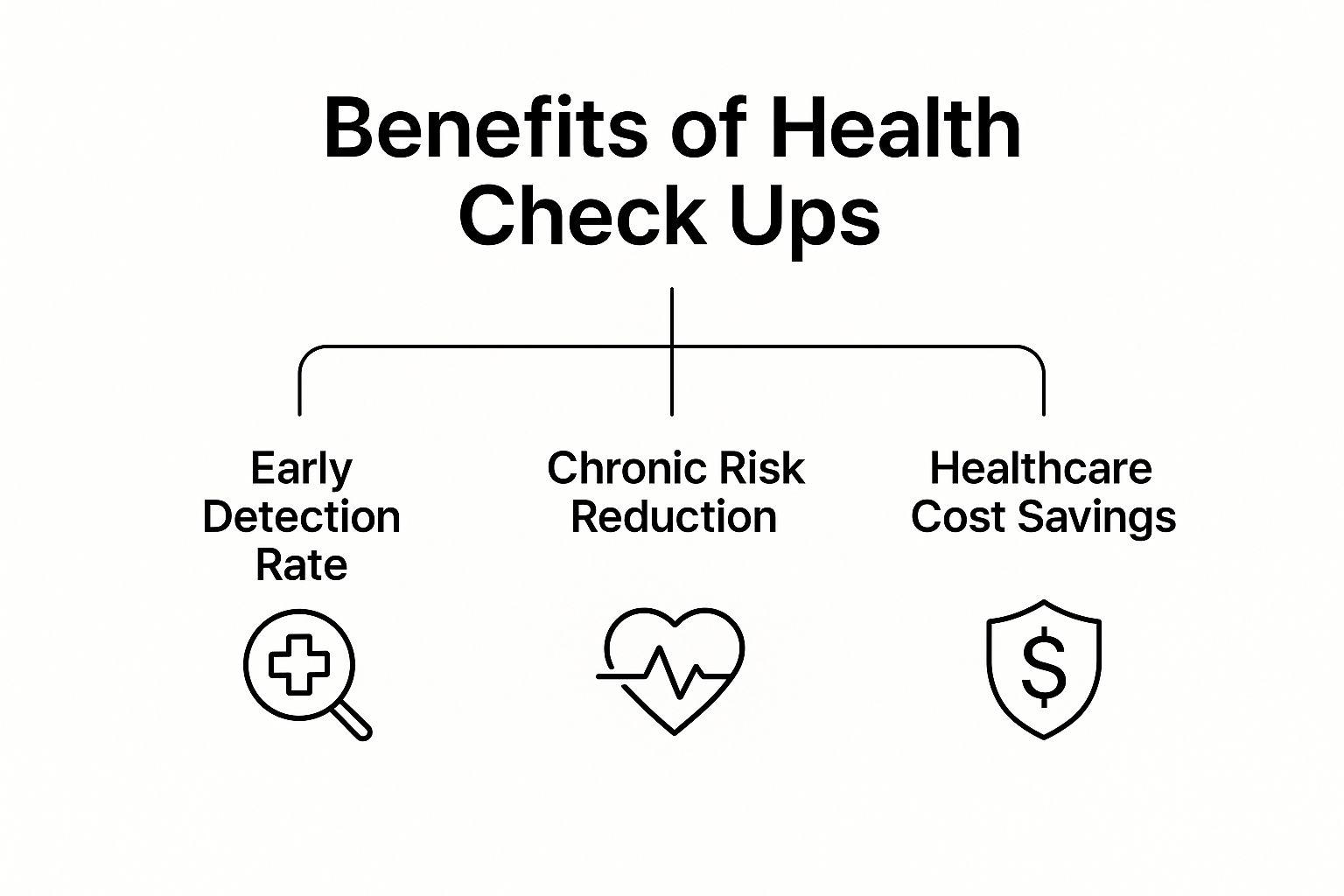
As you can see, putting a little time into preventive screenings is a powerful way to stay on top of your long-term wellness and even your finances.
Key Laboratory Tests and What They Reveal
A huge piece of any thorough check-up is the lab work, which usually involves analyzing small samples of your blood and urine. These tests give us a window into your internal health, revealing things a physical exam simply can't.
Think of lab results as the technical specs for your body. They provide precise data that, when combined with your physical exam and history, create a complete and actionable health overview.
Here’s a look at some of the most common tests and what they tell us.
Standard Tests in a General Health Check Up
| Test Name | What It Measures | Why It Is Important |
|---|---|---|
| Complete Blood Count (CBC) | Evaluates red blood cells, white blood cells, and platelets. | Helps detect conditions like anemia, infections, and other blood disorders. |
| Lipid Panel | Measures cholesterol and triglyceride levels. | Crucial for assessing your risk for heart disease and stroke. |
| Blood Sugar Test | Checks your glucose levels. | Screens for diabetes or pre-diabetes, allowing for early intervention. |
| Urinalysis | An analysis of your urine. | Can spot early signs of kidney disease, diabetes, and urinary tract infections. |
These core tests provide a wealth of information from just a small sample, making them an efficient way to check on your internal systems.
For many people, the idea of getting these tests done without leaving the house is a huge plus. If you're curious about this option, we have a helpful guide on blood tests at home in Dubai that breaks it all down.
Unlocking the Benefits of a Regular Health Check Up

It’s easy to think of a regular health check up as just another appointment to squeeze into a busy schedule. But seeing it that way misses the real value. This is a powerful, proactive step—a genuine investment in your future well-being. It's about spotting small issues before they snowball, giving you a clear, personalized plan to stay healthy for years to come.
Honestly, it's one of the best forms of self-care. When you prioritize these screenings, you take the driver's seat with your health. You swap uncertainty for empowerment. The payoff isn't abstract; it's real, measurable, and can profoundly improve your quality of life.
The Power of Early Detection
The single biggest win from a routine health check up? Catching problems early. So many serious conditions—like heart disease, type 2 diabetes, and even some cancers—creep up silently, with no obvious symptoms at first. By the time you feel something is wrong, the condition might be much more advanced and harder to manage.
Think of screenings as your body’s early-warning system. A simple blood test, for instance, can flag elevated blood sugar levels, pointing to pre-diabetes long before it becomes a lifelong condition. That gives you a golden opportunity to make lifestyle changes and potentially turn things around completely.
It’s the same story with blood pressure and cholesterol. Keeping an eye on these numbers helps identify cardiovascular risks before they become an emergency. With a little guidance on diet, exercise, or medication, you can dramatically lower your risk of a future heart attack or stroke. That alone shows the incredible power of a preventative health check up.
Creating a Personalized Health Roadmap
Your check-up results are more than just numbers on a page; they form a personalized roadmap for your long-term health. Instead of trying to follow one-size-fits-all advice you see online, you get guidance that's tailored specifically to your body, your lifestyle, and your unique health risks.
This personalized plan helps you tackle specific risks before they morph into chronic issues. Let's say your results suggest a risk for osteoporosis. Your doctor can work with you on a plan that includes specific foods and weight-bearing exercises to build stronger bones. It’s a smart, proactive approach that puts your individual needs first.
A health check up translates vague wellness goals into a concrete, actionable plan. It gives you the knowledge to make targeted changes that deliver real, lasting benefits for your specific health profile.
This personalized strategy is especially critical in regions where lifestyle factors create unique challenges. For example, physical inactivity is a major concern in the Middle East and North Africa, where an estimated 47% of adults don't get enough exercise. This contributes to a higher rate of non-communicable diseases, making routine screenings a vital tool for managing risk. You can find more insights on the impact of physical activity in the region on pmc.ncbi.nlm.nih.gov.
Long-Term Financial and Emotional Gains
Investing in a regular health check up is also one of the smartest financial decisions you can make. The cost of a preventive screening is a drop in the bucket compared to the expense of treating an advanced chronic disease or dealing with a medical emergency. Catching and managing issues early can help you avoid costly hospital stays, specialist treatments, and years of medication.
But beyond the money, there's an even bigger prize: peace of mind. Simply knowing you’re taking concrete steps to protect your health is incredibly reassuring. It replaces "what-if" anxiety with confidence and control. This emotional well-being is, without a doubt, a cornerstone of a happy and fulfilling life.
Choosing Between At-Home Screening and In-Clinic Visits
How we look after our health is changing. Gone are the days when a health check up meant only one thing: a trip to the doctor's office. Now, with the rise of at-home screening, you have more control and convenience than ever. But how does a simple kit compare to a full, in-person examination?
Let's break it down. Think of it like this: an in-clinic visit is like getting a detailed, hands-on diagnostic check for your car from a trusted mechanic. An at-home kit is like using the car's own onboard computer to get a quick snapshot of performance data. Both are useful, but they serve very different purposes.
There isn't a "better" option—just the right one for your specific health goals, any symptoms you might be feeling, and what you're trying to learn from the health check up.
The Case for an In-Clinic Health Check Up
There’s a reason the traditional clinic visit is still considered the gold standard. The biggest advantage is the direct, human interaction with a healthcare professional. That face-to-face conversation and physical assessment provide a level of detail that a remote test just can't match.
During an in-clinic health check up, your doctor can perform a hands-on physical exam. They'll listen to your heart and lungs, check your reflexes, and feel for any abnormalities. This is crucial information that helps build a complete picture of your health.
Plus, you get to have a real conversation. You can ask questions on the spot, and your doctor can dig deeper into your answers. This back-and-forth is key to connecting the dots and understanding your overall well-being.
A doctor's real skill is in putting all the pieces together—the physical exam, your personal history, and lab results—in real-time. It’s about seeing the whole story, not just a single data point, which is the foundation of great preventative care.
The Rise of At-Home Screening Kits
On the other hand, at-home health screening kits deliver unmatched convenience and privacy. These kits let you collect a sample, like blood or saliva, right in your own home and mail it to a lab for analysis. It’s discreet, simple, and fits into even the most packed schedules.
This is a fantastic option if you're tracking specific health markers or just want a preliminary look at your health without scheduling a full appointment. At-home tests are great for keeping an eye on things like cholesterol, vitamin levels, or hormone balance.
The main draws of at-home screening are clear:
- Convenience: No travel, no waiting rooms, no taking time off work. You do it on your own schedule.
- Privacy: Many people feel more comfortable handling the process discreetly at home.
- Accessibility: It opens up health monitoring for people who can't easily get to a clinic due to distance or mobility issues.
Of course, services that bring the professionals and tests directly to you offer the best of both worlds. If you're looking for that blend of convenience and expert oversight, you can see how a lab at home in Dubai works to see if it's the right fit.
Making the Right Choice for You
So, which path should you take? It's best to think of these as two different tools in your health toolkit. The right one depends entirely on your situation.
When to Choose an In-Clinic Visit
| Scenario | Rationale |
|---|---|
| You have specific symptoms | A doctor needs to conduct a physical exam and ask targeted questions to figure out what's wrong. |
| You need a comprehensive baseline | An in-clinic visit gives you the most complete starting point for your health journey. |
| You are managing a chronic condition | Regular, in-person check-ins are vital for keeping chronic conditions under control. |
| It is your first health check up | Starting a relationship with a primary care doctor is a crucial first step. |
When an At-Home Kit Might Be a Good Fit
| Scenario | Rationale |
|---|---|
| You want to monitor a specific marker | Perfect for tracking things like cholesterol or vitamin D levels between full doctor visits. |
| You are generally healthy and curious | A simple way to get a quick health snapshot without the commitment of a full appointment. |
| You have privacy concerns | At-home kits provide a discreet method for gathering personal health data. |
| You face logistical challenges | Ideal if your schedule is packed or you live far from a medical clinic. |
In the end, both options point you toward the same destination: a better understanding of your health. An at-home test can be a great first move, giving you valuable information to discuss with your doctor during a more thorough, in-clinic health check up.
How to Prepare for Your Health Check Up

To get the most out of your health check up, a little prep work goes a long way. It’s best to start thinking about it well before you even step into the clinic. Think of it like studying for an exam—the effort you put in beforehand makes all the difference in the outcome.
Proper preparation doesn't just help your doctor; it helps you. It ensures your test results are as accurate as possible and turns your appointment into a genuinely productive conversation about your health. This simple shift moves you from being a passive patient to an active partner in your own well-being.
Essential Pre-Appointment Steps
Before your health check up, there are a few practical things you can do to make everything run smoothly. These steps are all about giving your doctor the clearest, most accurate information needed to properly assess your health.
Fasting is one of the most common requirements. For many blood tests, especially those looking at cholesterol and glucose levels, you’ll need to avoid food and drink (except for water) for 8 to 12 hours before the appointment. This prevents a recent meal from skewing your results and gives a true snapshot of your metabolic health. Always double-check the specific fasting instructions when you book.
It's also a great idea to gather your medical details ahead of time. This should include:
- Medication List: Make a complete list of everything you take. This means prescriptions, over-the-counter medicines, vitamins, and any herbal supplements. Don't forget to include the dosages.
- Medical History: Jot down key facts about your health journey, like past surgeries, significant illnesses, and any known allergies.
- Family Health History: Take note of serious health conditions that run in your immediate family, such as heart disease, diabetes, or certain types of cancer. This information helps your doctor understand your genetic risk factors.
Organising Your Questions and Concerns
Your health check up is your dedicated time with a medical expert, so make it count. A few days before your visit, sit down and think about how you've been feeling. Write down any questions or concerns you have, no matter how small or silly they might seem.
Have you noticed any new or unusual symptoms? Are you curious about a specific diet or exercise trend? Do you need a clearer explanation of your current treatment? A written list is your best friend here—it ensures you won’t forget to ask something important when you're in the moment.
Preparing your questions ahead of time is one of the most powerful things you can do. It focuses the conversation on what matters most to you and ensures you leave the appointment with clarity and confidence in your health plan.
This proactive approach makes the entire consultation more effective. It shows your doctor you're engaged and invested in your health, which helps build a stronger partnership. If you know you'll need specific lab work, looking into the services offered by a top-tier medical lab in Dubai can also help you know what to expect. By being organized, you ensure every minute of your health check up is valuable, leaving you with clear answers and a solid plan forward.
Making Sense of Your Health Check Up Results
Getting a report full of medical terms after your health check up can feel like trying to read a different language. But this is where the real power of the check-up lies—in understanding what it all means for you. This information is your roadmap to making smart decisions about your health alongside your doctor.
Think of your results as a detailed snapshot of what’s happening inside your body. It’s full of important clues that, when pieced together, give a clear picture of your current health. You don’t need to become a medical expert, but getting a handle on the key numbers is a game-changer.
Decoding Common Health Metrics
Your report will have a list of different measurements, each with a "normal" range. It's important to remember that these ranges are just general guidelines. What's normal for you depends on a lot of things, like your age, gender, and personal health history. That's why your doctor's insight is so critical—they put these numbers into the context of your life.
Here are a few key areas you'll almost always see:
- Lipid Panel: This is all about your cholesterol and triglycerides. High levels of "bad" cholesterol (LDL) can point to a higher risk for heart issues, while "good" cholesterol (HDL) is what you want to see.
- Complete Blood Count (CBC): This test gives a rundown of your red and white blood cells. It’s a great tool for spotting signs of things like infection, anemia, or other hidden conditions.
- Blood Glucose: This is your blood sugar level. If this number is high, especially when you haven't eaten, it could be an early flag for pre-diabetes or diabetes.
Your results aren't a final grade on your health. They’re the start of a conversation. This data gives your doctor what they need to build a plan that’s just for you, whether that means a few lifestyle tweaks, more tests, or simply peace of mind.
From Results to Actionable Next Steps
The real value of a health check up isn't just in the numbers—it's in what you do with them. Your report is the first chapter, not the end of the story. Based on what your results show, your doctor will lay out clear next steps.
Sometimes, the plan is as simple as scheduling your next check-up in a year. Other times, it might be more specific. For example, if your blood pressure is a bit on the high side, your doctor might suggest small changes to your diet and a bit more daily movement. If a number is way off, they might refer you to a specialist for a closer look.
Ultimately, your health check up results are a tool for you and your doctor to use together. They make sure your health plan is based on real evidence, keeping you on the right path to feeling your best for years to come.
FAQs: Your Questions About Health Check Ups Answered
Deciding to get a health check up is a great first step, but it often brings up a few practical questions. You might be wondering how often you really need one, what the cost is, or what all the different types of screenings are for. It can feel a bit confusing, so let's clear things up with some straightforward answers.
Our goal here is to sort out any of those lingering doubts. Once you have the right information, you'll feel much more confident about managing your own preventive health.
How Often Should I Get a Health Check-Up?
There’s no magic number here—the right frequency for a health check-up really depends on you. Your age, your current health, and any family risk factors all play a big part. That said, we can start with some general guidelines that work for most people.
- Under 30 and Healthy: If you don't have any chronic conditions, checking in every 2-3 years is usually enough. This helps establish a baseline for your health moving forward.
- Ages 30-49: It's a smart move to schedule a health check-up every 1-2 years. This is the prime time to catch early signs of things like high blood pressure or cholesterol before they become bigger problems.
- Age 50 and Over: At this point, an annual check-up becomes really important. Your doctor will likely recommend more specific screenings for age-related conditions to keep you in top shape.
Of course, these are just starting points. If you're managing a chronic condition like diabetes or have a strong family history of a certain disease, your doctor will almost certainly want to see you more often.
Is a Health Check-Up Covered by Insurance?
In the AE region, insurance coverage for a health check up can vary quite a bit from one plan to another. Many of the more basic insurance plans will cover doctor visits and tests when they’re needed to figure out what's wrong with a specific symptom you're having.
However, a purely preventive screening—where you feel fine but just want to check—might not be part of a standard package. The more comprehensive insurance plans are the ones that often include an annual check-up as a benefit.
The best thing you can do is review your policy documents or just call your insurance provider before you book anything. Make sure to ask specifically about "preventive health screenings" or "annual physicals" to avoid any surprise bills later on.
What Is an Executive Health Check-Up?
You’ve probably heard the term "executive health check up" and wondered if it’s just a fancier name for a regular one. In reality, it’s a much more comprehensive and detailed health assessment, designed for people who want a complete 360-degree view of their health.
While a standard health check up nails the essentials, an executive screening goes much deeper. It often includes things like:
- Advanced heart tests (like an ECG or stress test).
- A full panel of cancer markers.
- In-depth hormone testing.
- One-on-one time with specialists, such as a cardiologist or a dietitian.
Think of it as the difference between a standard oil change and a full diagnostic overhaul for your car. For anyone with a demanding schedule or specific health worries, it’s a fantastic way to get a deep-dive analysis of your well-being in a single, efficient visit. And if you need medical advice but just can't get to a clinic, it's worth learning about the convenience of a doctor on call service for quick consultations right where you are.
Ready to take control of your health with unparalleled convenience? Call To Doctor brings expert, DHA-licensed medical professionals directly to your home, hotel, or office. Skip the waiting rooms and get personalised care when you need it most. Book your at-home health check-up today by visiting https://calltodoctor.ae.

Leave a Reply