




Physio at home is transforming rehabilitation by bringing a qualified physiotherapist with their expertise and treatment directly to your residence, eliminating the need to visit a clinic. This innovative service provides personalised, one-on-one care right at your doorstep, making your recovery feel more natural and seamlessly integrated into your daily life. It’s an ideal solution for anyone in Dubai requiring physical rehabilitation, from post-surgery patients to elderly individuals struggling with mobility.
Understanding Home Physiotherapy and Its Purpose
Imagine your recovery journey without the stress of Dubai traffic, crowded clinic waiting rooms, or feeling uncomfortable in an unfamiliar setting. That’s the powerful concept behind physio at home. More than just a convenience, it’s a patient-centric approach to rehabilitation that places you and your personal environment at the core of the healing process.
Think of it as having a dedicated health partner who comes to you. This professional doesn't just arrive with portable equipment; they bring expertise that is immediately adapted to your unique home surroundings. The primary purpose is to make your recovery practical and directly relevant to the movements and challenges you face every single day.
A Personalized Approach to Healing
The true power of home physiotherapy lies in its incredible level of personalization. In a clinic, a therapist might have you practice climbing stairs on a generic machine. A therapist providing physio at home, however, will work with you on your actual stairs, identifying specific issues with the height, the turn, or the handrail you use.
This real-world application is invaluable. Your treatment plan is built around the very environment where you live, which makes progress feel far more intuitive and meaningful. Suddenly, your favourite armchair, the layout of your kitchen, and even the walk to your bathroom become active tools in your rehabilitation, accelerating your return to independence.
By integrating therapeutic exercises into a patient's daily living space, at-home physiotherapy transforms routine activities into opportunities for recovery, fostering greater independence and faster, more sustainable results.
Who Benefits Most from Physio At Home
While anyone can appreciate the convenience, certain individuals find this service to be a true game-changer. Physio at home is designed to support a vast range of needs, ensuring top-tier care is accessible to everyone, regardless of their circumstances. Some of the people who benefit most include:
- Post-Surgery Patients: After a hip or knee replacement, mobility is often severely limited. Traveling to a clinic can be difficult and risky. Home physio ensures you receive consistent care during the most critical early stages of recovery.
- Elderly Individuals: For seniors dealing with mobility challenges or chronic conditions like arthritis, receiving care at home removes the physical strain of travel and reduces the risk of falls in unfamiliar places.
- People with Neurological Conditions: Patients recovering from a stroke or managing conditions like Parkinson's disease find immense value in therapy within a familiar, safe environment where they can relearn daily tasks and movements.
- Busy Professionals and Parents: For those juggling demanding schedules in Dubai, at-home sessions eliminate a major logistical headache, making it easier to prioritize health without disrupting work or family life.
Ultimately, the goal is to make recovery a seamless part of your life, not a stressful interruption. By understanding the best physiotherapy methods and their effects on the human body, you can appreciate how this personalized service speeds up healing. This approach ensures your journey back to health is not only effective but also comfortable and empowering.
The Rise of At-Home Healthcare in the UAE
A significant shift is underway in how we approach healthcare in the UAE. More people are choosing to receive expert medical care, like physio at home, in the comfort of their own living rooms instead of a traditional clinic. This isn't just a passing trend—it’s a fundamental change in patient expectations and modern healthcare delivery in cities like Dubai.
The days of dedicating half a day to a single clinic appointment are fading. In a dynamic, fast-paced environment, convenience is paramount. People seek solutions that fit into their busy lives, and at-home healthcare delivers exactly that.
This growing preference is establishing a new standard for patient-focused care. It represents a move away from a one-size-fits-all model toward a system that is more personal, accessible, and built around the individual's needs.
Key Drivers Fuelling This Shift
What’s behind this surge in demand for home-based medical services? Several key factors are at play. Firstly, the region's demographics are changing. The UAE has a growing elderly population for whom mobility issues can turn a simple clinic visit into a major ordeal.
For them, getting care at home is essential for maintaining independence and quality of life. Secondly, there's a strong cultural appreciation for privacy and one-on-one attention. Many families prefer the discretion and dedicated focus of a private, in-home session, which helps build a stronger, more trusting relationship with their therapist.
The market is responding to this demand. The Middle East and Africa home healthcare market is projected to skyrocket from USD 19.2 billion to USD 37.56 billion by 2033. This incredible growth is fuelled by the expanding elderly population and a rise in chronic conditions requiring consistent management.
When you bring care into the home, you change the dynamic. The patient is no longer just a passive recipient of treatment; they become an active partner in their own recovery, empowered by the familiarity and comfort of their own space.
Technology Is Making It All Possible
Technology has been a game-changer, making high-quality physio at home a reality. What once required bulky, clinic-based equipment can now be achieved with portable, sophisticated tools. Therapists can bring everything from electrical stimulation units to resistance bands right to your door.
This ensures the standard of care you receive at home is just as effective as what you’d find in a clinic. Beyond the physical gear, digital health platforms are a crucial part of the puzzle, creating a support system that extends well beyond the appointment itself:
- Telehealth Platforms: Allow for virtual check-ins and consultations, providing continuous guidance without needing an in-person visit every time.
- Mobile Apps: Deliver personalized exercise plans, video tutorials, and progress trackers directly to your phone, keeping you motivated.
- Wearable Sensors: Offer real-time feedback on your movements and form, helping you perform exercises correctly and safely.
This blend of hands-on expertise and digital support creates a comprehensive ecosystem of care. Understanding how a home doctor service in Dubai can work alongside physiotherapy illustrates just how integrated modern patient care has become. It’s a new model where recovery is woven directly into your daily life.
Why Home Physiotherapy Is a Game Changer
Choosing between a traditional clinic and physio at home can seem difficult, but the latter offers a complete upgrade to your recovery experience. It transforms rehabilitation from a series of appointments into a seamless part of your life.
The advantages extend beyond simply avoiding a commute. This approach is built on three powerful pillars that deliver better, more sustainable results: unmatched convenience, superior comfort, and truly personalized care. These elements don't just change the setting; they reframe the entire healing journey, making it more effective and significantly less stressful.
Unmatched Convenience and Safety
The most obvious benefit is the elimination of stressful travel. For those recovering from surgery or struggling with mobility, getting to a clinic can be exhausting. Home physiotherapy removes this barrier, allowing all your energy to be focused on healing, not logistics.
This convenience naturally leads to better consistency—a key ingredient for successful recovery. Furthermore, healing at home dramatically reduces exposure to germs and infections common in busy clinics, providing invaluable peace of mind for anyone with a weakened immune system.
The Power of Healing in a Familiar Space
There's a significant psychological advantage to recovering in your own home. Being in a familiar, private, and comfortable space reduces anxiety and stress, which can inhibit the healing process. When you feel safe and relaxed, your body is better equipped to heal.
This comfort also encourages more open engagement during sessions and provides a fantastic opportunity for family members to get involved. They can learn directly from the physiotherapist how to support you, becoming active partners in your recovery.
Home-based physiotherapy places the patient at the epicentre of their recovery. By using their own environment as the therapeutic setting, the care becomes 100% relevant, practical, and deeply empowering.
Truly Personalised and Functional Care
This is where physio at home truly excels. A physiotherapist visiting your home can identify real-world challenges and opportunities that would be invisible in a clinic. They see the exact chair you struggle with, the stairs you need to navigate, and the specific layout of your home.
With this firsthand insight, they design a rehabilitation plan that is 100% functional and tailored to your life. The exercises are not generic; they are designed to help you master your specific environment, building strength and confidence where you need it most.
A therapist might build a routine around:
- Practicing standing up safely from your own sofa.
- Improving your balance and walking pattern in your own hallway.
- Restoring shoulder mobility by reaching for items in your actual kitchen cabinets.
This level of customization makes every session incredibly practical, ensuring your progress translates directly into greater independence and a better quality of life.
To facilitate these sessions, therapists bring simple, portable equipment.
The infographic below highlights some of the most common tools used for in-home physiotherapy.
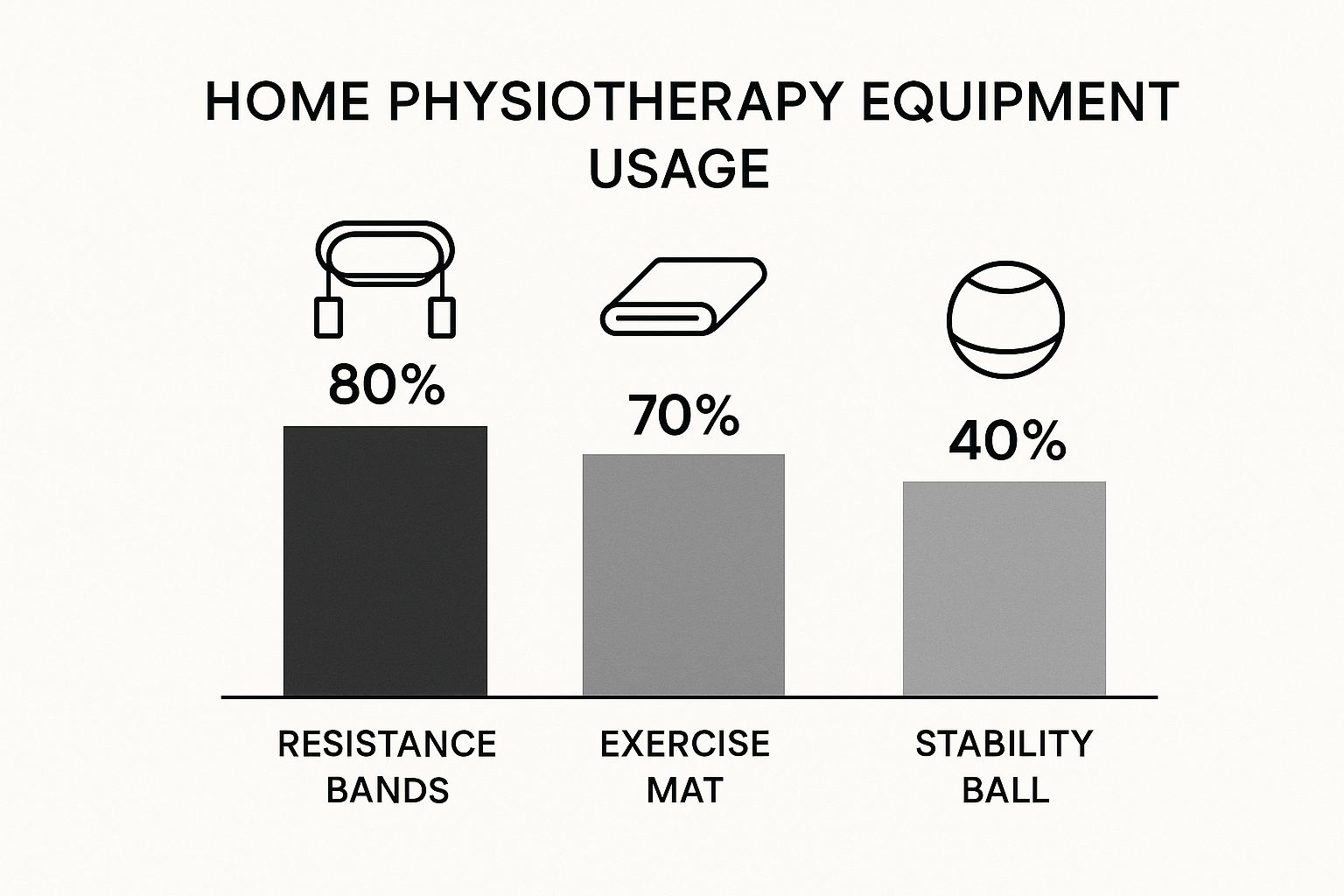
As you can see, versatile tools like resistance bands and exercise mats are staples because they are highly effective and allow a therapist to create a clinic-quality workout in your living room.
Comparing In-Clinic vs At-Home Physiotherapy
To truly understand the benefits, it's helpful to compare the two options. While both have their merits, knowing the key differences can help you decide which path is right for your recovery.
| Feature | In-Clinic Physiotherapy | Physio At Home |
|---|---|---|
| Convenience | Requires travel, which can be difficult for those with mobility issues. | No travel needed; the therapist comes to you, saving time and energy. |
| Environment | Clinical, shared space that can feel impersonal or intimidating. | Familiar, private, and comfortable home setting that reduces stress. |
| Personalization | Exercises based on general best practices and clinic equipment. | Treatment tailored to your specific home environment and daily challenges. |
| Family Involvement | Limited opportunities for family to observe or participate. | Family members can be easily involved, learning how to support recovery. |
| Safety | Higher potential exposure to infections in a busy clinic. | Minimized risk of exposure, ideal for post-surgical patients. |
| Appointment Adherence | Travel and scheduling can lead to missed appointments. | Higher consistency as logistical barriers are removed, leading to better outcomes. |
By combining convenience, comfort, and hyper-personalized care, physio at home is not just a different option—it is a more intuitive and effective way to regain your health.
Your First Home Physio Session Unpacked
Having a healthcare professional visit you at home for the first time can feel a bit unusual. It’s normal to be nervous about your first physio at home appointment. Knowing exactly what to expect can turn any uncertainty into confidence.
Think of this first visit not just as a treatment, but as a collaborative strategy session for your recovery. The primary goal is for your physiotherapist to gain a complete understanding of you—your condition, your goals, and your home environment. This initial meeting lays the foundation for your success.
The Initial Conversation and Goal Setting
Every session begins with a conversation. This is your opportunity to share your story. Your physiotherapist will want to know about your medical history, the cause of your pain or difficulty, and how it impacts your daily life.
Crucially, they’ll ask what you want to achieve. Is your goal to walk to the local shop without pain? To play with your grandchildren on the floor? Or simply to stand up from your chair without a struggle? These personal goals are the compass that will guide your entire treatment plan.
Your first home physiotherapy session is a partnership from the very first minute. It’s about building a clear, shared understanding of where you are now, where you want to be, and how you will get there together.
This conversation ensures the plan is not just clinically sound but also personally meaningful to you.
The Comprehensive Physical Assessment
Following the conversation, a hands-on physical assessment is conducted. This is where your therapist investigates the root cause of your issue through a gentle and professional process.
Your therapist will typically evaluate:
- Movement and Range of Motion: Observing how you move and gently guiding your limbs to assess joint mobility.
- Strength Testing: Simple tests to identify muscle weakness or imbalances contributing to the problem.
- Balance and Coordination: Essential for fall prevention, these tests assess your stability.
- Pain Analysis: Describing any pain during specific movements to help pinpoint triggers.
This assessment provides the objective data needed to construct an effective and targeted plan. To see how this personalized approach works in practice, learn more about our dedicated physiotherapy on call in Dubai services.
Evaluating Your Home Environment
This is where the unique advantage of physio at home becomes clear. Your therapist will assess your living space, not just for safety hazards, but for therapeutic opportunities.
Your home transforms into your personal rehab gym. A sturdy dining chair becomes a tool for sit-to-stand exercises. The staircase becomes a strength and endurance trainer. Even the layout of your home helps create functional mobility exercises. This practical approach ensures your progress translates directly into real-world independence, helping you get back to your life faster.
How Technology Is Shaping Home Physiotherapy
When you think of physio at home, you likely picture a therapist guiding exercises in your living room. While that remains the core, technology is adding a powerful new dimension to recovery. It creates a connected care experience that keeps you supported and motivated, even between sessions.
This isn't just about convenience; it's about making rehab smarter and more engaging. It’s like having a physiotherapist in your pocket, bridging the gap between appointments and ensuring your recovery momentum never stalls.
The Rise of Telerehabilitation
One of the biggest game-changers is telerehabilitation—using technology to provide physiotherapy remotely. This is far more than a simple video chat; it's a sophisticated method for follow-up sessions, progress checks, and real-time adjustments to your exercise plan.
If you're unsure about a movement, a quick video call allows your therapist to watch your form and provide immediate feedback, ensuring you perform the exercise safely and correctly. This remote support is ideal for those needing frequent check-ins without a full hands-on visit every time.
This modern approach is gaining traction in the Middle East. Studies in the MENA region show that telerehabilitation is not only feasible but also leads to positive patient outcomes, supporting its wider adoption.
Smart Tools for a Smarter Recovery
Beyond video calls, a new generation of smart tools is making physio at home more precise. These gadgets provide objective data that helps you and your therapist make better-informed decisions about your care.
Key tools making a difference include:
- Wearable Sensors: Small devices that track range of motion, movement quality, and repetitions, offering instant feedback to help you correct your form.
- Mobile Apps: Dedicated apps put your exercise plan on your phone, complete with video demos, progress trackers, and reminders to keep you accountable.
- Interactive Exercise Games: Some platforms turn repetitive exercises into engaging games. This "gamification" is a fantastic motivator, especially during a long recovery.
Technology transforms home physiotherapy from a series of appointments into a continuous, connected journey. It empowers patients with data, keeps them motivated with interactive tools, and ensures they feel supported every step of the way.
These digital tools create a constant feedback loop, keeping you committed and effective. To learn more about how these remote services work, exploring telehealth physiotherapy offers a deeper look into this modern approach. This blend of hands-on therapy and digital support is setting a new standard for recovery at home.
Finding the Right Home Physio Provider for You
Choosing a provider for physio at home is a critical decision that will directly influence your recovery. With many options available, it’s essential to know what to look for to ensure you receive safe, effective, and high-quality care.
Think of it as hiring a trusted partner for your health. You need someone with the right skills, experience, and approach—the right physiotherapist for you. A little research goes a long way.
Key Questions to Ask Potential Providers
Before committing, ask some direct questions. The answers will reveal a lot about a provider’s professionalism and quality of care.
Use this checklist to guide your conversation:
- Credentials and Licensing: "Are all your physiotherapists fully licensed by the Dubai Health Authority (DHA)?" This is non-negotiable and confirms they meet the UAE's strict professional standards.
- Specialized Experience: "Do your therapists have experience with my specific condition?" Whether it’s post-knee surgery, stroke recovery, or a sports injury, specialized expertise delivers better results.
- Treatment Philosophy: "Can you describe your approach to at-home physiotherapy?" Look for terms like personalized, goal-oriented, and evidence-based, showing a focus on your unique needs.
- Communication: "How will the therapist communicate with me and my family about my progress?" Clear and consistent communication is the foundation of a successful partnership.
These questions help you identify professionals who align with your needs.
Verifying Credentials and Specializations
Always verify a healthcare professional's qualifications. In the UAE, all physiotherapists must be licensed by the DHA. Don't hesitate to ask for their license number for verification.
Beyond basic licensing, inquire about specializations. If you have a neurological condition, a therapist with a neuro-physiotherapy background will be far more effective. To see a range of qualified professionals, you can browse a directory of physiotherapists in your area.
Finding the right provider means matching their specific expertise to your unique health needs. This alignment is the foundation of a successful recovery plan.
Understanding Logistics and Billing
Practical matters like scheduling and payment are equally important. Discuss scheduling flexibility to ensure it fits your routine. You’ll also need a clear explanation of their fee structure and what’s included in a session.
If you plan to use insurance, confirm they can work with your provider and find out what information they require. Clarifying these details upfront prevents headaches later.
The demand for these services is growing. The rehabilitation therapy market in the Middle East and Africa was valued at USD 10.47 Billion and is projected to hit USD 28.83 Billion by 2032. This reflects the strong healthcare infrastructure supporting essential services like physio at home.
Still Have Questions About At-Home Physiotherapy?
Deciding to start physio at home is a significant step, and it's natural to have questions. We’ve compiled answers to the most common queries to help you feel confident about your choice.
Consider this your final check-in before beginning your journey to recovery.
Is Physio At Home as Effective as a Clinic?
This is the most common question, and the answer is a definitive yes. In many situations, home physiotherapy is not just as good—it can be more effective than a clinic visit. This is due to its highly personalized, real-world approach.
In a clinic, you use generic equipment. At home, your therapy is tailored to your environment. This one-on-one attention allows your therapist to create functional exercises that address your daily challenges, often leading to faster, more meaningful results.
The real goal of physiotherapy isn't just to get stronger in a clinic; it's to regain the confidence to live fully and safely in your own home. That's where at-home physio truly shines.
What Conditions Are Best Treated at Home?
The focused and convenient nature of home physiotherapy makes it suitable for a wide range of needs, especially when mobility is a challenge or when recovery needs to be integrated into daily routines.
Common conditions where physio at home excels include:
- Post-Surgery Recovery: Essential for early, consistent therapy after knee or hip replacement.
- Neurological Conditions: Provides a safe, familiar space for patients with Parkinson's or recovering from a stroke.
- Mobility Support for the Elderly: Helps seniors build strength and balance in their own environment to maintain independence and prevent falls.
- Sports Injury Rehabilitation: Offers focused, private sessions tailored to return-to-sport goals.
- Chronic Pain Management: Provides consistent care and practical strategies for managing conditions like arthritis or back pain at home.
How Should I Prepare My Home for a Session?
Preparing your home is simple. You don't need a dedicated gym or fancy equipment. All that’s required is a small, clear space where you can move freely—an area about the size of a yoga mat is usually sufficient.
Your therapist is an expert at adapting to any home environment and will bring all necessary portable equipment. Simply ensure the area is well-lit and free of clutter or tripping hazards. Your therapist will handle the rest, transforming a small part of your home into the perfect recovery space.
Ready to start your recovery in the comfort of your own home? The professional and compassionate team at Call To Doctor is available 24/7 to bring expert physiotherapy directly to you. Book your appointment today and take the first step towards a stronger, healthier you at https://calltodoctor.ae.

Leave a Reply