



A preventive health check up is your body's essential maintenance schedule. It's a proactive series of medical tests and screenings designed to detect potential health issues before they become serious problems. Rather than waiting for symptoms to appear, this approach focuses on ensuring everything is functioning optimally, giving you peace of mind and control over your long-term wellness.
Why a Preventive Health Check Up is Your Best Health Investment
Think of it this way: you wouldn't drive your car until the engine fails before seeing a mechanic. You schedule regular oil changes and inspections to ensure it runs smoothly and safely. A preventive health check up applies the same smart principle to your most valuable asset: your body.
This is fundamentally different from a typical doctor's visit when you're feeling unwell. It is a strategic consultation with your physician to gain a comprehensive understanding of your current health status and to create a proactive plan for the future. The primary goal is to shift your focus from treating illness to actively maintaining and enhancing your well-being.
The Core Goals of Preventive Care
An effective checkup is structured around three key objectives. Understanding these highlights why being proactive is crucial for your long-term health.
- Early Detection and Intervention: Many serious conditions, including heart disease, diabetes, and certain cancers, can develop silently over years. A preventive health check up uses targeted tests to identify the earliest warning signs, allowing for intervention when treatment is most effective and least invasive.
- Identifying Personal Risk Factors: Your unique health profile is shaped by your genetics, family history, and lifestyle choices. A screening helps pinpoint your specific vulnerabilities. Armed with this knowledge, you can make informed decisions about your diet, exercise, and daily habits to mitigate those risks.
- Establishing a Health Baseline: Your first comprehensive checkup creates a detailed "snapshot" of your normal health metrics. Each subsequent checkup is compared against this baseline, making it significantly easier for your doctor to identify subtle but important changes over time that might otherwise go unnoticed.
A preventive health check up isn't just about searching for problems. It’s about confirming your health and creating a personalized strategy to maintain it. It is an investment in your future, offering both reassurance and control.
This forward-thinking approach to health is gaining significant traction. The health check-up market in the Middle East and Africa was valued at approximately USD 21.8 billion in 2025 and is projected to nearly double by 2031. This growth is driven by increasing awareness of chronic diseases and the expansion of corporate wellness initiatives.
Ultimately, a preventive checkup empowers you with knowledge. It transforms your relationship with your doctor from a reactive one (seeing them only when sick) to a proactive partnership in your long-term health. Regular consultations with your physician are vital; they are your general physician services your first line of defense. This proactive mindset not only improves health outcomes but can also significantly reduce future healthcare costs by preventing the need for complex treatments later on.
What to Expect During a Preventive Health Check Up
Walking into a clinic for a preventive screening can feel daunting if you're unsure what to expect. While it may seem complex, the process is a well-organized evaluation of your body's major systems. Think of it less as a test you can pass or fail and more as a detailed user manual for your own body.
This process is about gathering concrete data, moving beyond a vague sense of well-being to look at specific numbers that reveal what's happening internally. By understanding the components of a preventive health check up, you can feel more empowered and appreciate the value of each step.
Let's break down the essential elements of a typical health screening.
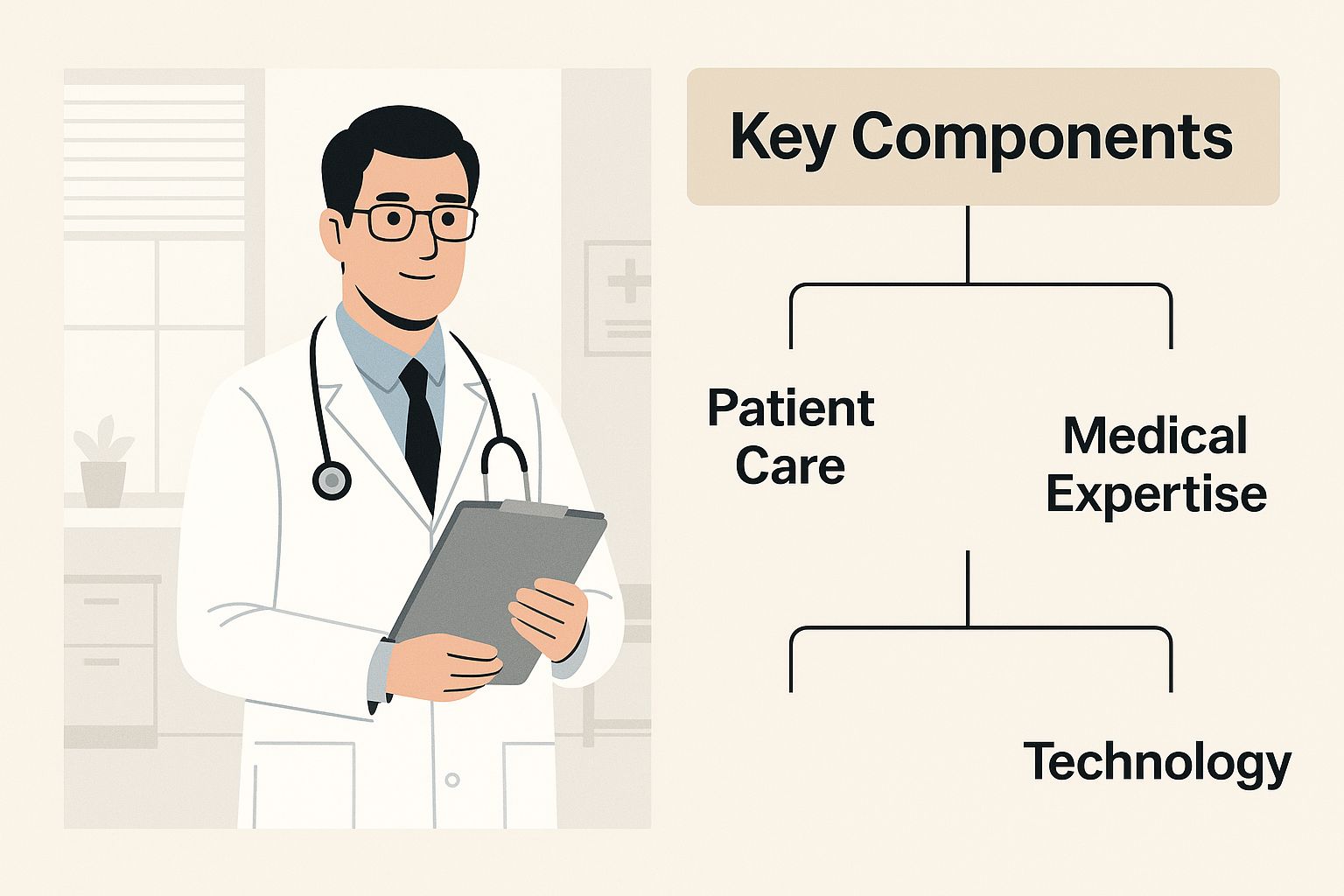
As you can see, the screening is a layered process. It begins with fundamental measurements and progresses to more specific tests, all designed to provide your doctor with a holistic view of your health.
Starting With the Vital Signs
Nearly every medical examination begins with a check of your vital signs. These are the fundamental measurements that provide a quick, real-time snapshot of your body's basic functions. They are called "vital" for a reason—they are the most critical indicators of your immediate health status.
These foundational metrics include:
- Blood Pressure: This measures the force of blood against your artery walls. Consistently high blood pressure (hypertension) can silently damage your heart and blood vessels, increasing the risk of heart attack or stroke.
- Heart Rate: This measures the number of times your heart beats per minute. An abnormally fast or slow rate could indicate an underlying issue with your heart's rhythm or function.
- Body Mass Index (BMI): Calculated from your height and weight, BMI provides a general assessment of body fat. It helps identify if you are at a healthy weight, as being underweight or overweight is linked to various health conditions.
What Your Blood Work Reveals
Following the vitals check, a small blood sample is usually drawn. This step provides a wealth of information that a physical exam cannot. It's like receiving a detailed internal report on your body's chemistry.
Your blood tells a powerful story. A few simple tests can uncover hidden risks related to your metabolism, organ function, and diet, giving you the opportunity to make positive lifestyle changes before minor issues escalate.
Let's explore some of the most common tests included in a preventive screening and what they reveal.
Common Preventive Health Check Up Tests and Their Purpose
| Test Category | Specific Test | What It Measures | Why It's Important |
|---|---|---|---|
| General Health | Complete Blood Count (CBC) | Levels of red cells, white cells, and platelets. | Detects conditions like anemia, infection, and blood disorders. |
| Heart Health | Lipid Panel | "Good" (HDL) and "bad" (LDL) cholesterol, and triglycerides. | Assesses your risk for cardiovascular disease and stroke. |
| Metabolic Health | Blood Sugar (Glucose) | The amount of glucose in your blood. | Screens for prediabetes and diabetes, which affect millions. |
| Liver Health | Liver Function Test | Levels of specific enzymes and proteins in the blood. | Checks for liver damage, inflammation, or disease. |
| Kidney Health | Kidney Function Test | Waste products like creatinine and blood urea nitrogen (BUN). | Evaluates how well your kidneys are filtering waste. |
These tests form a solid foundation for understanding your health from the inside out.
Checking on Your Key Organs
While vitals and blood work cover the basics, a truly comprehensive full body check up also examines the performance of your major organs. These tests look for specific markers—enzymes, proteins, and waste products—that indicate whether your organs are functioning efficiently or are under stress.
For instance, a liver function test can detect early signs of liver damage long before symptoms appear. Similarly, kidney function tests ensure your body's natural filtration system is working correctly.
Finally, screenings are often customized based on age and gender. For women, this might include a Pap smear or mammogram. For men, a prostate-specific antigen (PSA) test may be recommended. Each component of the screening is carefully selected to build a clear, personalized picture of your current health.
Tailoring Your Checkup For Every Stage Of Life
A preventive health checkup is not a one-size-fits-all event. It’s a dynamic health plan that should adapt as you progress through different stages of life. The health concerns of a 25-year-old are vastly different from those of a 55-year-old, so your screening schedule must evolve accordingly.
This personalized approach ensures you are always screening for the right conditions at the right time. It moves beyond a generic checklist to become a strategic plan tailored to your age, lifestyle, and unique risk factors. Let's explore how this health roadmap changes over the decades.

Your 20s and 30s: Building a Strong Foundation
During these foundational decades, the primary goal is to establish healthy habits and create that crucial health baseline. Screenings focus on long-term prevention and catching any early-onset issues.
This is the ideal time to establish a relationship with a primary care doctor you trust. A physician who knows your history is an invaluable partner. You can learn more about how a family physician provides care for all ages and can guide you through every stage of your health journey.
Common screenings for this age group include:
- Regular Blood Pressure Checks: A simple yet powerful tool to monitor for hypertension.
- Cholesterol Screenings: Establishes a baseline for cardiovascular health.
- Gender-Specific Screenings: Includes Pap tests for women to screen for cervical cancer.
- Lifestyle Assessments: Honest discussions about diet, exercise, smoking, and alcohol consumption are vital.
Your 40s and 50s: Shifting to Proactive Monitoring
As you enter your 40s and 50s, your body undergoes natural changes, and the risk for certain chronic diseases increases. Your preventive checkups become more targeted, incorporating specific screenings to detect common age-related conditions when they are most treatable.
This is where the true power of early detection becomes evident. Identifying pre-diabetes or high cholesterol now gives you a significant advantage in preventing a more serious diagnosis later.
Think of it like a routine inspection on a bridge. You're not waiting for cracks to appear; you're proactively searching for signs of stress and reinforcing the structure to ensure it remains strong for years to come.
Screenings that typically begin in this period include:
- Blood Sugar Tests: More frequent monitoring for diabetes and pre-diabetes becomes a priority.
- Mammograms: Women generally start regular mammograms to screen for breast cancer.
- Colonoscopies: Screening for colorectal cancer is a key milestone, often recommended to start at age 45.
- Prostate Health: Men should begin discussing prostate cancer screening options with their physician.
Your 60s and Beyond: Prioritizing Long-Term Wellness
In your 60s and later, preventive care focuses on maintaining quality of life, managing existing conditions, and preventing complications. Checkups become even more personalized, taking your complete health history into account.
At this stage, your doctor will pay close attention to bone health, sensory changes (vision and hearing), and cognitive function. The ultimate goal is to help you remain healthy, active, and independent.
Key screenings at this age include:
- Bone Density Scans: Essential for detecting osteoporosis, particularly for women.
- Vision and Hearing Tests: Regular checks to monitor for age-related decline.
- Medication Review: A thorough review to ensure all prescriptions are still effective and interacting safely.
In the United Arab Emirates (UAE), there is a strong and growing emphasis on preventive health, supported by public awareness campaigns and policies that promote early disease detection. Cities like Dubai and Abu Dhabi offer specialized screening packages for different age groups and risk profiles, often with digital integration for fast, easy-to-understand results.
Ultimately, tailoring your preventive health check up to your life stage transforms it from a routine appointment into a powerful strategy for lifelong wellness.
How to Prepare for Your Health Check Up Appointment
An effective health checkup doesn't begin when you step into the clinic; it starts with preparation at home. Getting organized beforehand can transform a routine visit into a productive and insightful conversation about your health, ensuring you leave with clear answers and a concrete action plan.
Think of it this way: you wouldn't attend an important business meeting unprepared. Your health checkup deserves the same level of attention. A few simple lists and thoughtful questions are all it takes to help your doctor get a complete picture, leading to better advice for you.
Gather Your Health Information
Before your appointment, take a few minutes to compile the key details of your health history. It's easy to forget important information when you're on the spot, so having it written down is incredibly helpful.
Jot down these simple lists:
- Family Health History: Note any major health conditions that your parents or siblings have experienced, such as heart disease, diabetes, or cancer. Your genetic background provides valuable clues for your doctor.
- Your Personal Health History: List any past surgeries, significant illnesses, or chronic conditions you manage. Don't worry about exact dates if you can't recall them.
- Current Medications and Supplements: Write down everything you take regularly, including prescriptions, over-the-counter medications like aspirin, vitamins, and herbal supplements. Be sure to include the dosage.
Prepare a List of Questions and Concerns
This appointment is your dedicated time. It's easy to get sidetracked and forget to ask about that one thing that's been on your mind. The solution is simple: write down your questions in advance. No question is too small or insignificant to raise.
Your appointment is a partnership with your doctor. Arriving with thoughtful questions demonstrates that you are an active participant in your health journey, which is the first step toward achieving better outcomes.
Think about any new symptoms you've noticed, concerns about your diet or sleep, or anything that feels "off." It’s also important to be open about your lifestyle habits—such as smoking, alcohol consumption, or stress levels. Your doctor needs this honest information to provide the best possible guidance.
Follow Pre-Appointment Instructions
Finally, carefully follow any specific instructions provided by the clinic. The most common requirement for a preventive health check up is fasting, which typically means abstaining from food and drink (except for water) for 8 to 12 hours before your blood test.
Why is this critical? Fasting ensures that tests for blood sugar and cholesterol are not influenced by a recent meal, giving your doctor an accurate baseline reading. If you are unsure about the instructions, don't hesitate to call the clinic for clarification. For those with busy schedules, at-home testing can simplify this process. We explore this further in our guide on blood tests at home in Dubai. A little preparation goes a long way in making your checkup a stress-free and valuable experience.
Making Sense of Your Preventive Health Check Up Results
After your checkup, you'll receive a report that can seem like a daunting collection of medical terms, acronyms, and numbers. It's natural to feel overwhelmed. However, this report is not a grade on your health; it's a detailed snapshot of your body's internal state at this moment.
The true value lies not in the numbers themselves, but in their interpretation. This is where your doctor's expertise is essential. They act as your translator, placing the data into the context of your personal health profile—your age, lifestyle, and family history.
What Are "Normal Ranges"?
On your report, you will likely see a column labeled 'normal range' or 'reference range' next to each result. This indicates the range of values typically found in the general healthy population. For example, a normal range for fasting blood sugar might be 70-99 mg/dL.
It's crucial to understand that "normal" is not a universal standard. A result slightly outside this range does not automatically signal a problem. Factors like your age, gender, and even the specific laboratory that processed the test can influence these ranges.
Your test results are like individual data points. Your doctor connects these points to reveal the complete picture, explaining what it all means for your unique health journey.
Your doctor will analyze your results in relation to your personal health baseline and risk factors. This is why self-interpreting your report can lead to unnecessary anxiety or a false sense of security. The most valuable insights come from a professional medical consultation.
The Follow-Up Conversation Is Key
Your follow-up appointment is arguably the most critical part of the entire preventive health check up process. This is your opportunity to move beyond the raw data and have a meaningful conversation about your health. To maximize this time, come prepared with questions.
Consider asking:
- What do these results mean for me personally?
- Are there any specific results that I should pay close attention to?
- Based on this report, what lifestyle changes would you recommend?
- What are the next steps?
Understanding Your Next Steps
After reviewing your results together, your doctor will outline a clear plan. This plan will typically fall into one of three categories.
- A Clean Bill of Health: If your results are within a healthy range for you, the plan is simple: continue your healthy habits! You'll schedule your next routine checkup. This is excellent news and confirms that your proactive approach is effective.
- Lifestyle Adjustments: Some results might indicate areas for improvement. For example, slightly elevated cholesterol could lead to a discussion about dietary modifications or increasing physical activity. These are not diagnoses but opportunities to fine-tune your habits and prevent future problems.
- Further Investigation or a Specialist Referral: In some cases, a result may be significantly out of range and require a closer look. Your doctor might recommend more specific tests or refer you to a specialist. This is a positive step, as it means you've detected a potential issue early and are being directed to the appropriate expert.
Ultimately, your health checkup results are your personal health roadmap. They show you where you are today, helping you and your doctor chart the best course for a healthier tomorrow.
Overcoming Common Barriers to Health Screenings
Understanding the importance of a preventive health check up is one thing; scheduling it is another. Life often gets in the way, and it’s easy for our health to fall to the bottom of the to-do list. The most common obstacles are cost, time, and anxiety.
However, these barriers are more manageable than they appear. With practical strategies and a shift in mindset, you can integrate regular checkups into your life as an empowering routine rather than a dreaded task.

Tackling the Cost Question
The potential cost is a significant concern for many. It's helpful to reframe this as an investment rather than an expense. The fee for a preventive screening is minimal compared to the potential financial and emotional cost of treating a serious illness that could have been detected earlier.
Furthermore, many insurance plans, especially in the UAE, cover a significant portion of preventive care because it is proven to reduce long-term healthcare expenditures. The best first step is to contact your insurance provider to confirm what your policy covers. You may be pleasantly surprised.
Fitting It Into a Packed Schedule
Finding the time for a clinic visit can feel like a logistical challenge in today's fast-paced world. Between work deadlines and family responsibilities, a doctor's appointment can seem like an unattainable luxury.
The good news is that modern healthcare is adapting to these demands by offering more convenient solutions:
- All-in-One Packages: Many clinics now offer comprehensive packages that bundle all necessary tests into a single, efficient visit.
- Flexible Hours: Look for providers that offer evening or weekend appointments to avoid disrupting your work schedule.
- At-Home Convenience: For maximum time-saving, some services can bring the check up to you. A doctor on call service can perform many screening tests from the comfort of your home or office, a game-changing option for busy professionals or those with mobility issues.
Confronting Fear and "What If" Worries
The fear of receiving bad news is a powerful and very human reason for avoidance. This "what if" anxiety can be paralyzing, making it seem easier not to know. While this feeling is common, it's worth viewing the situation from a different perspective.
Think of a preventive health check up as a search for health, not a search for sickness. The goal is to get peace of mind that everything is okay—or, to get the information you need to make positive changes.
Knowing where you stand, good or bad, puts you back in control. If an issue is discovered, early detection provides the best possible chance for a simple and effective treatment. Procrastinating does not change a potential health outcome; it only delays your ability to address it. Taking this proactive step is crucial, especially when considering how factors like access to care influence health outcomes—a major focus of studies on regional health system performance.
Your Top Questions About Health Check-Ups, Answered
Considering a preventive health check up often raises several important questions. It's natural to seek clarity before making these screenings a regular part of your wellness routine. Here are answers to some of the most frequently asked questions.
Having clear, straightforward information can empower you to make confident decisions about your health.
How Often Should I Get a Preventive Health Check Up?
This is the most common question, and the answer is: it depends on your individual health profile. As a general guideline, most healthy adults under 50 should have a checkup every two to three years. After age 50, an annual checkup is recommended.
However, this is just a starting point. Your personal health history is the most important factor. If you have a family history of a specific condition like heart disease, or if you are managing a chronic issue like high blood pressure, your doctor will likely recommend more frequent screenings to monitor your health closely.
Are These Check-Ups Covered by Insurance?
In many cases, yes. Most health insurance plans, particularly in the UAE, provide coverage for preventive services. Insurers recognize that early detection is far more effective and less costly than treating advanced diseases.
However, it is always a wise practice to contact your insurance provider before scheduling your appointment. They can confirm the specific details of your coverage to ensure there are no unexpected costs.
Isn't a Preventive Screening Just a Diagnostic Test?
This is an excellent question that highlights a key distinction. A preventive health check up is a proactive measure taken when you feel perfectly healthy. Its sole purpose is to screen for hidden risks or potential issues before they cause any symptoms.
In contrast, a diagnostic test is reactive. It is ordered by a doctor because you are already experiencing symptoms—such as chest pain or a persistent cough—and the test is needed to determine the underlying cause.
Are There Any Risks Involved with a Health Checkup?
For the vast majority of people, preventive screenings are extremely safe. The tests involved are typically non-invasive or minimally invasive, meaning they do not involve major surgical procedures.
The most common experience is the minor discomfort of a small needle prick during a blood draw, which may result in minimal bruising. When you weigh this against the significant benefit of early detection of a potentially serious condition, the advantages are clear.
Take control of your health without the hassle of clinic visits. Call To Doctor brings expert, DHA-licensed medical professionals to your home, office, or hotel for comprehensive check-ups and medical care. Book your convenient at-home appointment today at https://calltodoctor.ae.

Leave a Reply