




Ever heard the saying, "An ounce of prevention is worth a pound of cure"? That's the core principle behind a full body health checkup. It’s a comprehensive series of medical tests and physical exams that provides a detailed snapshot of your current health status. Think of it as a proactive strategy to identify potential health issues long before they escalate into serious problems, ensuring you stay one step ahead.
What Is a Full Body Health Checkup?

A great analogy for a full body health checkup is the annual service for your car. You don't wait for the engine to fail before checking the oil, brakes, and fluids, do you? You perform routine maintenance to keep the car running smoothly and catch minor issues before they become costly breakdowns. This checkup does the exact same thing for your body, offering a clear picture of what’s happening internally.
Its primary goal is early detection of potential red flags—such as high cholesterol, elevated blood sugar levels, or vitamin deficiencies. In our modern world of demanding schedules and lifestyle-related health risks, this kind of comprehensive screening isn't just a luxury; it's an essential component of managing your long-term health and well-being.
The Shift Towards Preventive Healthcare
In recent years, there has been a significant shift in healthcare philosophy. More people are realizing that prevention is far more effective and less costly than cure. Instead of reacting to illness, individuals are taking a proactive stance, taking control of their health destinies. This proactive mindset is especially crucial in regions experiencing a sharp rise in lifestyle-related conditions.
For example, here in the United Arab Emirates (UAE), a growing awareness of preventive healthcare is fueling major growth in the health screening market. Driven by the increasing incidence of conditions like diabetes, the Middle East & Africa health check-up market is projected to reach approximately USD 1.24 billion by 2030.
A full body health checkup empowers you with knowledge, replacing guesswork with concrete data. This allows you and your doctor to make informed decisions about your diet, lifestyle, and any necessary medical interventions.
Ultimately, this checkup serves as your personal health audit. It provides invaluable peace of mind and builds a solid foundation for a healthier future. Understanding the key components of a comprehensive health screening is the first step toward taking charge of your well-being.
Core Components of a Full Body Health Checkup
Understanding the various tests included in a full body health checkup can feel overwhelming. Let’s demystify it. The screening is a well-organized evaluation of your body's most critical systems. Each component assesses a specific area, and together, they create a holistic view of your health.
This diagram illustrates how a full body health checkup is structured around three main pillars: blood tests, imaging studies, and a physical examination.
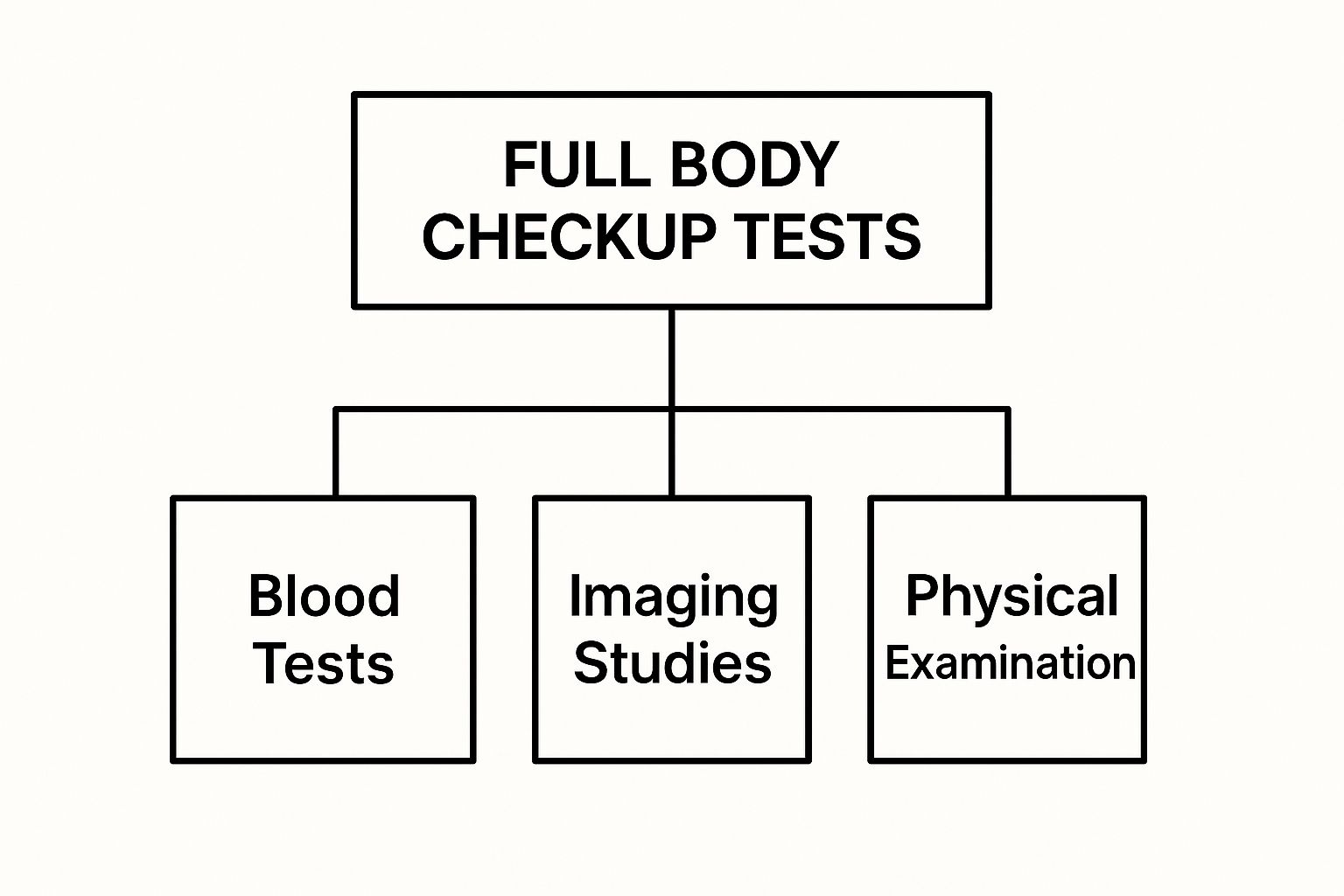
While each component is distinct, they work in synergy to provide your doctor with a clear, comprehensive understanding of your internal health. Let’s explore what each of these core components entails.
Key Tests Included in a Full Body Health Checkup
To give you a clearer idea of what is being evaluated, here’s a table that breaks down some of the most common tests. It explains what they measure and, more importantly, why they are vital for your overall health.
| Test Category | Specific Tests Included | What It Checks For |
|---|---|---|
| Hematology | Complete Blood Count (CBC) | Anemia, infections, inflammation, and other blood-related disorders. |
| Cardiovascular | Lipid Profile (Cholesterol) | "Good" (HDL) and "bad" (LDL) cholesterol, triglycerides; assesses heart disease risk. |
| Metabolic | Fasting Blood Sugar, HbA1c | Diabetes, pre-diabetes, and how your body manages blood sugar over time. |
| Liver Function | LFTs (Enzymes like ALT, AST) | Liver health, signs of damage, inflammation, or disease. |
| Kidney Function | KFTs (Creatinine, Urea) | How well your kidneys are filtering waste from your blood; detects early kidney disease. |
| Cardiac Health | Electrocardiogram (ECG) | The heart's electrical activity, looking for irregular rhythms or other cardiac issues. |
| General Imaging | Chest X-ray | The health of your lungs and heart, screening for abnormalities or signs of infection. |
This is not an exhaustive list, but it covers the foundational tests that provide the most critical information about your body's key systems.
Essential Blood Tests and Health Markers
Blood tests are the cornerstone of any comprehensive health screening. A small sample of blood can yield an immense amount of information about your internal health, acting as a diagnostic tool for a wide range of conditions.
The Complete Blood Count (CBC) is one of the most fundamental tests. It measures your red and white blood cells, hemoglobin, and platelets. This simple test can indicate everything from an active infection to anemia or other underlying hematological issues.
Another critical component is the Lipid Profile, which focuses on cholesterol levels. It measures your "good" (HDL) and "bad" (LDL) cholesterol, as well as triglycerides. Since elevated LDL cholesterol is a major risk factor for heart disease, this test is essential for assessing your cardiovascular health.
Evaluating Major Organ Function
Your organs work tirelessly to keep your body functioning optimally. A full body checkup ensures they are in good working order. The screening places a strong emphasis on the liver and kidneys, your body's primary filtration systems.
- Liver Function Tests (LFTs) measure specific enzymes and proteins to assess liver health and detect signs of damage or inflammation.
- Kidney Function Tests (KFTs) evaluate how effectively your kidneys are removing waste products from the blood, which is crucial for the early detection of kidney disease.
A full body health checkup isn’t just about detecting problems. It's also about confirming that everything is functioning correctly, establishing a personal health baseline for future comparison.
Your metabolic health is also closely examined. Tests for Fasting Blood Sugar and HbA1c (glycated hemoglobin) are the gold standard for screening for diabetes. The HbA1c test is particularly valuable as it reflects your average blood sugar levels over the past three months, providing a more stable and reliable picture. For more on the convenience of these tests, explore the benefits of a lab at home in Dubai.
Physical Examinations and Imaging Tests
A checkup is incomplete without a thorough physical examination. Your doctor will assess vital signs like your blood pressure, heart rate, and body mass index (BMI). This physical assessment helps contextualize your lab results within your overall health profile.
Depending on your age, risk factors, and medical history, your doctor might also recommend imaging studies. A Chest X-ray provides a clear view of your lungs and heart, while an Electrocardiogram (ECG) maps your heart's electrical activity to detect any irregularities. These non-invasive tests offer a crucial window into your body’s internal structures and functions.
Why Proactive Health Checkups Are Essential

A full body health checkup is more than just a medical appointment; it’s a strategic investment in your future. This proactive approach fundamentally changes how you manage your health, shifting the focus from treating illness to preventing it from occurring in the first place. It’s about taking control of your health narrative.
Consider this scenario: discovering slightly elevated blood pressure today allows you to implement simple lifestyle modifications, like dietary adjustments or increased physical activity. This small, early intervention can prevent the development of serious hypertension, protecting your heart and arteries from long-term damage. It’s the classic principle of "a stitch in time saves nine."
From Early Detection to Disease Prevention
The true value of a full body health checkup lies in its ability to identify risk factors before they develop into chronic diseases. Many conditions, such as pre-diabetes, high cholesterol, or vitamin deficiencies, often present with no noticeable symptoms in their early stages. Without regular screening, they can go undetected for years, causing silent damage.
A proactive checkup provides the invaluable advantage of time. It gives you the opportunity to change course, strengthen your health, and transform a potential health crisis into a manageable lifestyle adjustment.
The rising prevalence of non-communicable diseases (NCDs) in our region underscores the importance of preventive screening. Recent data reveals that major risk factors for heart disease and diabetes have increased by over 50% in the Middle East and North Africa in recent decades. This trend makes it clear: shifting from a reactive "wait-and-see" approach to a proactive one is not just advisable, it's essential.
A Smart Investment in Your Quality of Life
Beyond disease prevention, regular health screenings are remarkably cost-effective. The expense of a checkup is minimal compared to the long-term financial—and emotional—burden of managing a chronic illness like heart failure or advanced diabetes.
Prioritizing your health today protects your future in several ways:
- Financial Savings: Avoid the significant costs of specialized treatments, lifelong medications, and potential hospitalizations.
- Enhanced Quality of Life: Early detection of risks helps you maintain an active, vibrant lifestyle for years to come.
- Peace of Mind: Knowing your health status provides a sense of calm and reduces the anxiety associated with the unknown.
Ultimately, a proactive checkup empowers you with knowledge. It transforms healthcare from a reactive measure into a strategic tool for building a healthier, more resilient future. For a deeper dive, explore our guide on the importance of a preventive health checkup.
How to Prepare for Your Full Body Health Checkup

To ensure the most accurate results from your health screening, a little preparation is key. Just as you would organize your financial documents before meeting an accountant, preparing for your checkup ensures the final report is a true reflection of your health. The same principle applies to your full body health checkup.
Following a few simple guidelines before your appointment guarantees the reliability and accuracy of your test results. This groundwork minimizes the risk of skewed readings that could lead to unnecessary concern or additional tests, making the process smoother for both you and your doctor.
Your Pre-Checkup Preparation Checklist
To ensure your results are as precise as possible, it is crucial to follow these guidelines in the hours leading up to your appointment. These steps help establish a stable baseline for your body, allowing the tests to capture an accurate snapshot of your internal health.
Here is a simple guide to help you prepare:
- Fasting is Essential: You will likely need to fast for 8-12 hours before your appointment. This means abstaining from all food and beverages except for plain water. Fasting is crucial for accurate blood sugar and cholesterol measurements, as recent food intake can temporarily alter these levels.
- Stay Hydrated with Water: While other drinks are not permitted, drinking plenty of water is encouraged. Proper hydration makes it easier for the phlebotomist to draw blood and helps you feel better during the fasting period.
- Avoid Certain Substances: It is advisable to avoid alcohol and caffeine for at least 24 hours before your checkup. Both substances can significantly affect your blood pressure, heart rate, and liver function test results.
- Get a Good Night's Sleep: Aim for a full, restful night's sleep before your appointment. Sleep deprivation can influence various physiological parameters, including blood pressure, heart rate, and blood sugar levels.
Proper preparation is not just about following rules; it’s about providing your doctor with the most accurate data possible. This clear information is the foundation for a meaningful discussion about your health and subsequent steps.
What to Bring to Your Appointment
Being organized on the day of your checkup helps your doctor gain a comprehensive understanding of your health. Having your information readily available transforms your appointment into a productive, collaborative discussion rather than just a series of tests. It also helps you remember any important points you wanted to discuss.
Arrive with this information on hand:
- Current Medications: A detailed list of all prescription medications, over-the-counter drugs, vitamins, and supplements you are taking.
- Medical History: Notes on any past surgeries, significant illnesses, or known allergies.
- Family Health History: Information about chronic conditions in your immediate family (such as heart disease or diabetes) can provide valuable context for assessing your own health risks.
- List of Symptoms: A written list of any specific health concerns or symptoms you have been experiencing, no matter how minor they may seem.
Ensuring the accuracy of your blood work is a critical part of the health checkup process. You can learn more about the services offered by a leading medical lab in Dubai to understand how quality testing supports your overall health journey.
Understanding Your Health Report and Next Steps
Receiving your health checkup report can feel like opening a report card—a mixture of anticipation and anxiety. You'll see a document filled with medical terminology, numbers, and reference ranges that may seem confusing. However, this report is your personal health blueprint, and learning to interpret it is the first step toward taking control of your well-being.
First, let's clarify 'normal ranges.' These are general guidelines based on average results from a large, healthy population. Your individual "normal" may vary depending on factors like age, gender, and health history. Therefore, your results are just one piece of a larger puzzle, not the final word.
Your Follow-Up: Turning Data into an Action Plan
The most important part of your full body health checkup is the follow-up consultation with your doctor. This is where abstract numbers are translated into a practical, personalized action plan. To maximize the benefit of this discussion, it's essential to be an active participant in your healthcare.
Your objective is to leave the appointment with a clear understanding of your results and the necessary next steps. A little preparation can make a big difference. Review your report beforehand and note anything that seems unclear, concerning, or noteworthy. This simple step ensures all your questions are answered and you leave with a clear, actionable strategy.
Think of your health report not as a final grade, but as a starting point. It’s the crucial information you need for a strategic conversation with your doctor about maintaining your long-term health.
Key Questions to Ask Your Doctor
To ensure your consultation is productive, come prepared with a few questions. This will help focus the discussion on practical advice and clear next steps, empowering you to make informed decisions about your health.
Here are some ideas to get you started:
- For Maximum Impact: "Based on these results, what are the one or two most important lifestyle changes I can make?"
- To Understand Future Risks: "Does anything in this report indicate a higher risk for specific health conditions in the future?"
- Regarding Next Steps: "What is our plan moving forward? Do I need further tests, or should we monitor certain levels?"
- On Diet and Fitness: "Based on these results, are there specific foods I should incorporate or avoid, or certain types of exercise you would recommend?"
A collaborative conversation helps you and your doctor create a proactive health plan together, ensuring every aspect of your full body health checkup contributes to a healthier you. To see how convenient the testing process can be, check out our guide on scheduling a blood test at home in Dubai.
How Often Should You Get a Full Body Health Checkup?
"How frequently do I need a full body health checkup?" This is a common and important question. The answer is that there's no one-size-fits-all schedule. The ideal frequency depends on a unique combination of your age, personal health history, family medical history, and lifestyle factors.
Think of it like creating a fitness plan. A professional athlete's training regimen will differ significantly from that of someone who enjoys occasional walks. Similarly, your health checkup schedule must be tailored to your specific health profile. The goal is to establish a proactive rhythm that is appropriate for you and your body.
This decision should be made in consultation with your doctor. Together, you can develop a personalized screening schedule that helps you stay ahead of potential health issues.
General Frequency Guidelines by Age
While your doctor's recommendation is paramount, here are some general guidelines that can serve as a starting point for your discussion. These recommendations are based on age and overall health status.
- In Your 20s and 30s: If you are in good health with no significant risk factors, a comprehensive checkup every 2–3 years is generally sufficient. This helps establish a baseline for monitoring your health over time.
- From 30 to 40: As you enter this decade, it is wise to increase the frequency to every 1–2 years. This is often when lifestyle-related factors can begin to manifest.
- Age 40 and Beyond: At this stage, an annual full body health checkup is strongly recommended. Yearly screenings become crucial for the early detection of age-related conditions, which are most effectively managed when caught early.
These are general guidelines. If you have a family history of conditions like heart disease or diabetes, or if you are managing a chronic illness, your doctor will likely recommend more frequent or specialized checkups.
Ultimately, your checkup schedule should be a dynamic plan that evolves with your life and health circumstances. It's about forging a strong partnership with your doctor to actively manage your well-being.
Full Body Health Checkup: Frequently Asked Questions
It's natural to have questions before booking a health checkup. To help you feel confident and well-prepared, we've compiled answers to some of the most frequently asked questions.
How Long Does a Full Body Checkup Take?
You might be surprised by how efficient the process is. From the moment our team arrives to collect samples and perform the physical exam, the entire process is typically completed in under an hour. It is designed to fit conveniently into your schedule with minimal disruption.
Is the Health Checkup Process Painful?
We prioritize your comfort throughout the entire checkup. The only discomfort you might experience is a brief pinch during the blood draw, which lasts only a few seconds. All other components, such as the ECG and physical examination, are completely painless.
A full body health checkup is a brief moment of proactive care that delivers lasting peace of mind. It’s a small investment of your time for a significant return in health awareness.
Do I Need a Doctor's Referral to Book a Checkup?
No, a referral is not required. You can book a full body health screening directly with us whenever you decide it's the right time for you. This direct access makes it simple to take control of your health and get a clear understanding of your current status.
Ready to take the next step in proactively managing your health? Call To Doctor brings professional medical services directly to your home, making preventive care more accessible than ever.
Book your complete at-home health checkup today by visiting https://calltodoctor.ae.

Leave a Reply